


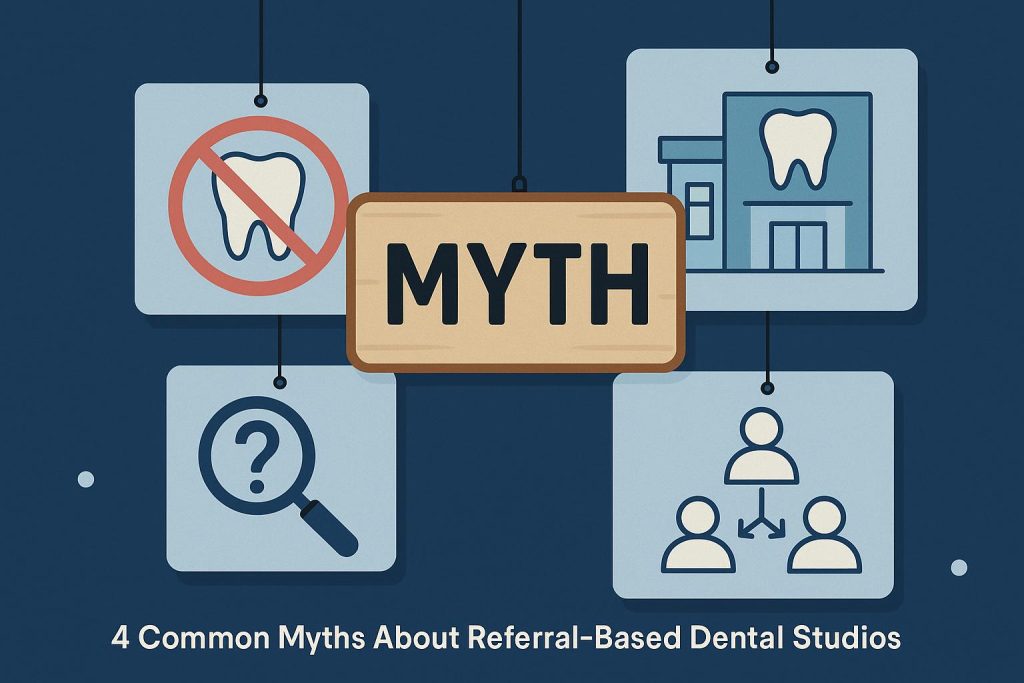
Many people feel unsure when a general dentist refers them to a specialty dental studio. You might wonder if the referral is really needed, if it costs more, or if your own dentist is letting you down. These quiet doubts can grow and stop you from getting the care you need. Referral-based dental studios exist to handle complex needs that a regular office cannot safely manage. A North San Antonio dentist who refers you is not passing you off. Instead, you get a team that shares records, plans, and follow-up. This shared care often means fewer surprises, fewer repeat visits, and safer results. Still, myths about referrals spread fast and create fear. This blog clears up four common myths so you can face your next dental referral with calm, clear eyes and steady trust in your care plan.
Myth 1: “A Referral Means My Dentist Did Something Wrong”
Many people take a referral as a sign of failure. You might think your dentist missed something or caused a problem. That belief is harsh and false.
Here is the truth. Dentistry works best as a team effort. Different dentists train for different skills. Some focus on routine care. Others train for root canals, gum surgery, or complex tooth replacement. A referral often shows strong judgment.
You can expect three things when a dentist refers you.
- Your dentist wants the safest care for you.
- You get someone who treats your exact problem all day.
The American Dental Association explains that dentists often work together to match care to your needs.
Myth 2: “Referral-Based Dental Studios Always Cost More”
Money fear is strong. Many people think a referral means a bigger bill. Sometimes a single visit to a specialty studio costs more than a cleaning at your home office. Still, the full story is different.
Specialty care often means fewer visits, fewer repeat treatments, and fewer problems later. That can lower your total cost over time. You also reduce the risk of emergency visits.
Example Cost Comparison Over One Year
| Type of Care | Number of Visits | Estimated Upfront Cost | Repeat Treatment Needed | Estimated Total Cost |
|---|---|---|---|---|
| Complex root canal done in the general office | 3 | $900 | Often | $1,500 or more |
| Complex root canal in referral-based studio | 1 to 2 | $1,200 | Less often | $1,200 to $1,300 |
These numbers are sample figures. Actual costs vary by city, insurance, and the work you need. The main point is simple. Correct care the first time often costs less than repeat care.
The National Institute of Dental and Craniofacial Research explains that early and correct care lowers the risk of tooth loss and major surgery.
Myth 3: “My Dentist Will Stop Caring About Me”
Another fear is loss. You might worry that once you see a referral-based dental studio, your regular dentist will step back and stop caring. That does not match how referral systems work.
In most cases, your general dentist stays your main contact. The studio handles a specific task. Then you return to your regular office.
Here is how it often works.
- Your dentist finds a complex problem.
- You get a referral for a clear, limited service.
- The studio sends notes and images back to your dentist.
- You go back to your regular office for cleanings and future checks.
You stay at the center of this process. Your dentist and the studio share records, not control over you. This shared care can also protect you from mixed messages. Each office sees the same images and notes. That lowers confusion and stress.
Myth 4: “Referral-Based Dental Studios Are Only For Extreme Cases”
Many people think they must be in serious danger before a referral makes sense. You might picture major surgery or severe pain. In reality, studios help with a wide range of needs.
Common reasons for referral include three broad groups.
- Deep tooth decay that reaches the nerve.
- Gum disease that does not improve with standard care.
- Missing teeth that need implants or complex bridges.
Some referrals are also preventive. A dentist might send you to a studio before a problem gets worse. That step can protect the bone, gums, and nearby teeth. It can also shorten healing time and keep you working, parenting, and living with less disruption.
How To Protect Yourself When You Get A Referral
Trust grows when you feel informed. When your dentist suggests a referral, you can protect yourself by asking clear questions.
- Why are you recommending this referral now?
- What exact work do you expect the studio to do.
- Will you stay my main dentist after this work is done.
- How will you and the studio share my records.
- What are the risks if I delay or skip this referral?
You can also bring a written list? of your medicines, health conditions, and past dental work. That helps both offices plan safe care. You have the right to ask for copies of your records and images. You can keep them for your own files.
Key Takeaways For You And Your Family
A referral can stir fear, anger, or shame. Those feelings are common. They are also based on myths that hurt your health.
- A referral usually means your dentist is careful, not careless.
- Upfront costs may be higher, but repeat care often drops.
- Your regular dentist still leads your routine care.
- Referral based studios help with many problems, not just rare ones.
You deserve clear answers and safe treatment. When you see a referral slip, pause and, as Referral-based, use that information to make a steady choice for your teeth, your comfort, and your long term health.

