


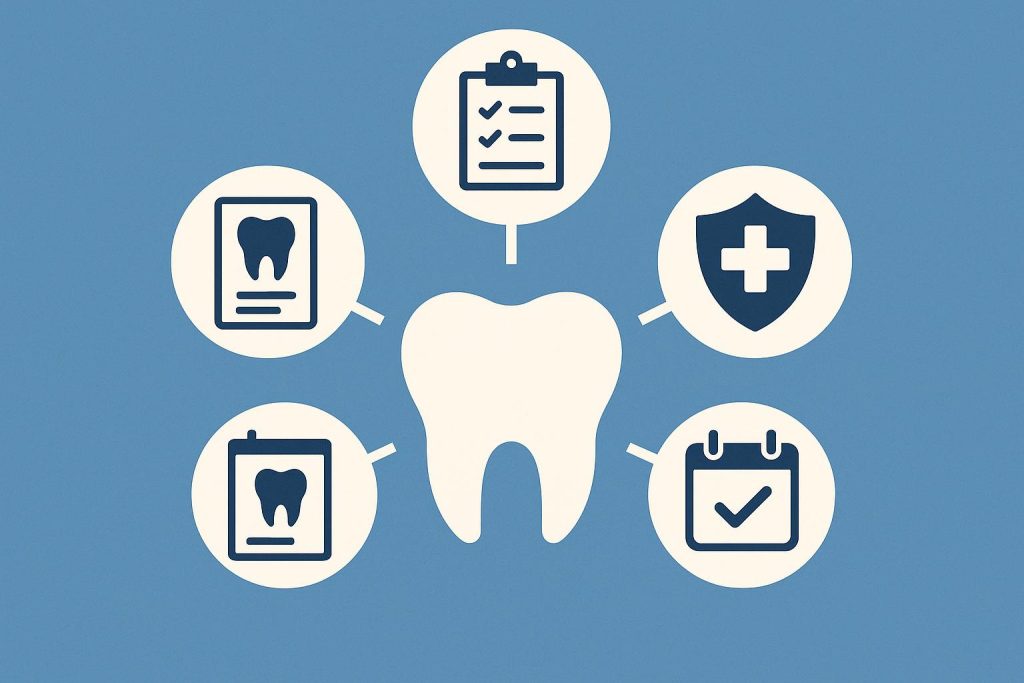
You might be feeling pulled in ten different directions when it comes to your family’s dental care. One child needs braces, another has a cavity, you are overdue for a cleaning, and every provider seems to be working in their own bubble. That’s why finding dental care for families in Ventura can make such a difference. You repeat the same medical history over and over, you worry something will slip through the cracks, and it all feels more complicated than it should be.end
Because of this constant juggling, you may be asking yourself a simple question. Is there a way to have one trusted home for all of our dental needs, where the pieces actually connect and make sense together?
That is exactly where coordinated care in a family dental practice comes in. When one team looks after your whole family, shares information, and plans care together, you get fewer surprises, fewer repeat visits, and a clearer plan for keeping everyone healthy. In short, coordinated care means less chaos and more confidence.
Below, you will see how a coordinated family dentist can make everyday life easier, protect your children’s long term oral health, and even save you money and time over the years.
Why does dental care feel so disjointed for families?
Think about a typical year. Your toddler has their first visit to a pediatric dentist. Your teenager goes to an orthodontist across town. You see a general dentist near your office. Each provider is skilled, yet they often use different records, different treatment plans, and different communication styles.
The result. You carry the burden of being the “project manager.” You try to remember what each dentist said, which x-rays were taken, and when treatments are due. It can be stressful, especially if a family member has special health needs or dental anxiety.
There is also a real clinical concern. When care is scattered, important details can get lost. A small problem in a child’s mouth might not be tracked over time. An issue that affects both teeth and overall health might not be recognized early. Research on the concept of a “dental home” shows that having a consistent, coordinated source of care improves preventive visits and reduces urgent dental problems. You can see this outlined in the American Academy of Pediatric Dentistry’s policy on the dental home model.
So, where does that leave you? You can keep trying to glue together separate pieces on your own. Or you can look for a family dental practice that offers coordinated dental care for all ages, so the system supports you instead of the other way around.
Benefit 1. One “dental home” that knows your family story
Coordinated care starts with the idea of a dental home. That means one practice becomes the central place for your family’s oral health. Your records, x-rays, and treatment plans live in one system. Your dentist sees how your child’s teeth change from year to year, and they know your own history too.
This matters emotionally as much as medically. Your children see familiar faces. You do not have to explain your fears or health conditions over and over. If you have a child who is anxious or has sensory needs, the team can build trust slowly, because they expect to see your family for years, not just once.
Over time, patterns become clear. If you have a strong family history of cavities or gum disease, your dentist can adjust prevention early. This is exactly what research on coordinated oral health care supports. For example, a study on integrated dental and medical care showed better preventive outcomes when teams shared information and worked together, instead of in isolation. You can read more about these benefits in this review of integrated oral health programs.
Benefit 2. Fewer surprises, better long term planning
When care is not coordinated, problems tend to show up as emergencies. A toothache on a Sunday. A broken filling right before a school trip. A sudden recommendation for braces that you did not see coming.
In a coordinated family practice, your dentist is always looking ahead. They track how your child’s bite is developing. They plan around your family calendar. They talk with you about what might be needed in one year, three years, or five years.
This kind of planning makes treatment feel less scary. Instead of hearing “your child needs treatment right now,” you hear “we are watching this, here is what we expect, and here is how we can prepare together.” For many parents, that sense of predictability is as important as the treatment itself.
Benefit 3. Stronger prevention at every age
Coordinated care also improves prevention. When the same practice cares for your toddler, teen, and yourself, the team can see which habits are working and which are not.
Maybe your youngest has early signs of enamel weakness. The dentist can review brushing, fluoride use, and diet with the whole family. Maybe you struggle with gum disease. The team can watch your children more closely, knowing they may share that risk.
Because everyone is on the same page, simple preventive steps like regular cleanings, sealants, fluoride, and early orthodontic checks are less likely to be missed. Over time, this can mean fewer fillings, fewer extractions, and fewer long appointments that pull kids out of school and you out of work.
Benefit 4. Easier logistics and less emotional strain
There is also the very real day to day side of things. Coordinated care in a family dental practice makes life more manageable.
You can often schedule several family members on the same day, instead of driving to three different offices in one month. Billing is clearer, because everything runs through one system. Information about insurance, allergies, and medications is updated once, not three times.
Emotionally, this matters. Fewer offices mean fewer unknowns, fewer waiting rooms where you do not know what to expect, and fewer moments of feeling alone in the process. Over the years, that familiarity can be a quiet source of comfort for both you and your children.
How does coordinated care compare with “every provider on their own”?
You might still be wondering whether it is worth the effort to move toward a coordinated family dentist. A simple comparison can help clarify the tradeoffs.
| Aspect | Coordinated Family Dental Practice | Separate, Uncoordinated Providers |
|---|---|---|
| Records and history | One shared record for the whole family. Trends and risks are easier to track. | Scattered records. You repeat history and may miss important connections. |
| Planning and prevention | Proactive planning for future needs. Strong focus on prevention. | Care is often reactive. Problems may be caught later. |
| Time and scheduling | Family appointments, fewer trips, more predictable visits. | Multiple offices, more travel, harder to coordinate schedules. |
| Emotional comfort | Familiar team, consistent approach, less anxiety for children. | New faces and routines. Some children struggle to adjust. |
| Costs over time | Better prevention can reduce emergency visits and complex treatments. | Higher chance of urgent care and advanced procedures in the long run. |
Seeing the differences side by side often makes the choice clearer. A coordinated approach does not remove every problem, yet it gives you a structure that supports your family instead of adding to your stress.
What can you do now to move toward coordinated family dental care?
If your current situation feels scattered, you do not have to fix everything at once. A few thoughtful steps can start to bring your family’s care under one roof.
1. Identify or create a “dental home” for your family
Look for a family dentist who is comfortable caring for both adults and children, or who has a clear partnership with pediatric and specialty providers. Ask specific questions.
- Do you keep one shared record for each family, or separate charts that do not interact?
- How do you coordinate if my child needs orthodontic or specialty care?
- Can you outline how you handle long term planning for children as they grow?
You are looking for a practice that sees itself as your long term partner, not just a place for one time treatments.
2. Bring all relevant information into one place
Once you choose your central practice, gather what you can. Recent x-rays, medication lists, allergy information, and past treatment notes are all helpful. Ask previous providers to share records. Many offices will send these directly when you sign a simple release form.
The goal is to give your new team a complete picture, so they can coordinate care confidently and avoid repeating tests or missing important details.
3. Plan your next year instead of only your next visit
At your first few appointments, ask your dentist to sketch out a one year plan for each family member. This might include routine cleanings, any needed restorative work, and monitoring points for growth or orthodontic issues.
Having even a simple written plan shifts you from reacting to problems to guiding your family’s care with intention. It also makes budgeting and scheduling easier, because you know what to expect.
Bringing it all together for your family
You do not have to carry the entire load of coordinating dental care on your own. When you choose coordinated care in a family dental practice, you gain a partner that understands your family’s story, plans ahead with you, and works to prevent problems before they start.
The change may feel gradual at first. Fewer rushed visits. More familiar faces. Clearer answers to your questions. Over time, the benefits grow. Healthier smiles, calmer children, and a sense that your family’s care is finally connected.
You deserve that kind of steady support. Taking the first step toward a true dental home can be one of the quiet, powerful decisions that shapes your family’s health for years to come.

