


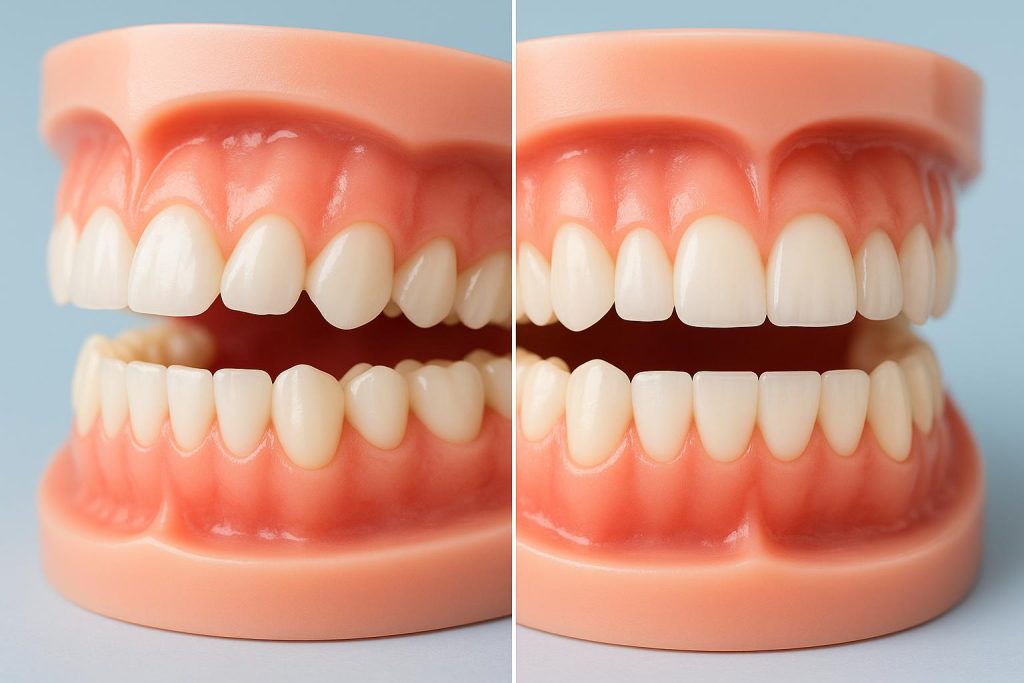
You might be looking at photos of your teeth and thinking, “Something still feels off, even after whitening or bonding.” Your teeth may be straight enough, the color is better, yet your smile does not look as balanced or confident as you hoped. Maybe your front teeth look short, your smile seems narrow, or your jaw feels tense when you bite down. A consultation with a Boston cosmetic dentist can help you understand what’s really going on with your smile and what options you have to improve it. It can be confusing and a little discouraging, especially if you have already invested time and money into cosmetic work.end
Because of this tension, you might wonder if you are just being too picky, or if there is something deeper going on. The truth is that the way your upper and lower teeth meet, called your bite or occlusion, can quietly shape almost every part of how your cosmetic smile appears. This includes how much tooth shows when you smile, how even the edges look, and how relaxed your lips and jaw appear in photos.
In simple terms, here is the core idea. Cosmetic dentistry is not only about making teeth whiter or straighter. The alignment of your bite is the foundation that supports every cosmetic change. When your bite is balanced, cosmetic work tends to look more natural, last longer, and feel more comfortable. When your bite is off, even beautiful cosmetic work can chip, wear down, or simply look “not quite right.”
Why does your bite matter so much to your cosmetic smile?
Think of your smile as a team effort between your teeth, jaw joints, muscles, and lips. If one part is out of sync, the whole look is affected. A misaligned bite can mean your upper and lower teeth do not meet evenly. Some teeth may work too hard, others hardly touch at all. Over time this can change the shape and appearance of your teeth and even your face.
For example, if your front teeth collide too strongly every time you close, they can chip or wear down. The edges start to look uneven or shorter. If your back teeth do not support your bite properly, your jaw may slide forward or to one side, which can make your smile seem off center in photos. You might also see more gum on one side than the other, even though your teeth themselves are healthy.
Emotionally, this can be draining. You might avoid close-up photos, or feel self-conscious when laughing. You may have already tried whitening, veneers, or bonding, and still feel something is wrong. It is not just about looks either. An unbalanced bite can cause jaw soreness, headaches, or teeth grinding at night, which slowly damages the cosmetic work you paid for.
So where does that leave you? It helps to understand how different bite problems change the way your smile looks, and how correcting them can support a more natural, long-lasting cosmetic result.
How different bite problems change the look of your smile
There are several common bite patterns that affect your cosmetic smile. You can read more about how teeth and jaws fit together in medical references such as this overview of malocclusion. Here are a few everyday examples of how alignment shapes appearance.
Overbite or deep bite. If your upper teeth cover too much of your lower teeth when you close, your lower teeth may almost disappear when you smile. This can make your upper front teeth look too dominant and your smile less balanced. It can also cause wear on the inside of the upper teeth and the edges of the lower ones.
Open bite. If your front teeth do not touch when you bite together, you may notice a gap between the upper and lower teeth when you smile. This can affect how clearly you speak certain sounds and can make your smile look “stretched” or uneven.
Crossbite. When some upper teeth bite inside the lower teeth, one side of the smile may look tucked in or shadowed. Your smile can appear narrower on that side, and your midline (the line between your two front teeth) may not match the center of your face.
Crowding or spacing. Crowded teeth can twist and overlap, creating dark triangles or uneven edges that catch the eye in photos. Wide gaps can make teeth look smaller than they are. Both patterns affect how light reflects off your smile and how symmetrical it appears.
An experienced implant and cosmetic dentist will look at all of this before placing veneers, crowns, or implants. If the bite is not stable, cosmetic work may need to be redone sooner than expected. Balanced occlusion supports not only how your smile looks today, but how it will look and feel years from now.
Is it enough to “fix what you see,” or do you need bite alignment too?
It is very tempting to only fix the part you notice in the mirror. Maybe you just want that chipped tooth repaired or your front teeth whitened. Cosmetic dentistry can certainly improve those visible issues, yet if the underlying bite problem is not addressed, the same chipping, cracking, or uneven wear can return.
For instance, imagine you get beautiful veneers on your front teeth without adjusting a deep overbite. Every time you close, those veneers take heavy force. Over time they may crack at the edges or come loose. You may feel frustrated, wondering why “the work did not last,” when the real problem was that your bite never supported the cosmetic change.
On the other hand, when bite alignment is part of the plan, your cosmetic smile has a stable foundation. Sometimes this means orthodontic treatment with braces or clear aligners before cosmetic work. You can learn more about how braces work and what they can correct through resources like the American Dental Association’s guide to braces and MedlinePlus information on orthodontia.
Other times, your dentist may make small adjustments to your bite by reshaping certain tooth surfaces, or by designing crowns and implants that distribute your bite forces more evenly. The goal is not perfection in a technical sense. The goal is a balanced, comfortable bite that supports a natural looking smile.
When you hear terms like how bite alignment affects the look of your cosmetic smile or “functional aesthetics,” this is what they describe. Your teeth should look good and work well at the same time.
Cosmetic-only fixes vs bite-focused treatment: what really changes?
To make this more concrete, it can help to compare a “surface only” cosmetic approach with a plan that includes bite correction. Research on occlusion and restorative dentistry, such as information provided in this clinical reference on dental occlusion, supports the idea that long term success often depends on how the teeth meet, not just how they look.
| Approach | Short term appearance | Comfort and function | Longevity of cosmetic work | Typical situations |
|---|---|---|---|---|
| Cosmetic-only treatment (no bite adjustment) | Fast change. Teeth can look whiter, straighter, or more even very quickly. | May not improve jaw tension, grinding, or clicking. Existing discomfort can continue. | Higher risk of chips, fractures, or wear if bite forces are uneven. | Minor spacing or color issues with an already stable bite. Small cosmetic touch ups. |
| Cosmetic treatment with bite alignment | Results may take longer, but final smile often looks more natural and balanced with your face. | Better support for chewing, speaking, and jaw comfort. Can reduce strain on teeth and joints. | Cosmetic work is more likely to last because forces are shared more evenly across teeth. | Moderate to severe crowding, wear, or jaw symptoms. Planning veneers, crowns, or implants. |
So, where does that leave you if you are considering cosmetic dental work now, or if you are unhappy with how past work is holding up? It points to the need for a conversation that includes both appearance and function. In other words, a focus on a truly balanced cosmetic smile, not just a quick fix in the mirror.
Three practical steps you can take right now
1. Pay attention to what you feel, not just what you see
Before any appointment, take a few days to notice how your teeth and jaw feel in everyday life. Do you clench when concentrating or driving. Do you wake up with sore teeth or tight jaw muscles. Do certain teeth hit first when you close, or does your jaw slide slightly to find a comfortable bite. Write these observations down. They are clues about your bite and can guide the conversation with your dentist.
2. Ask your dentist specific questions about your bite
When you see an implant and cosmetic dentist, bring your notes and ask targeted questions such as. “How is my bite affecting the look and wear of my teeth.” “If we do veneers, crowns, or implants, how will you make sure my bite is stable.” “Do you see any signs of grinding or uneven wear.” A thoughtful dentist will be glad you asked. If the answer focuses only on color and shape and never mentions bite or function, it may be worth seeking a second opinion.
3. Be open to a phased plan instead of a quick makeover
It can feel frustrating to hear that you might need orthodontic treatment or bite adjustment before cosmetic work, especially if you hoped for a fast change. Yet a phased plan often protects your investment and your comfort. For example, short term aligner treatment to correct crowding, followed by carefully planned veneers or crowns, can give a more stable and natural result than rushing straight to cosmetic treatment alone. This is how a thoughtful cosmetic dentistry plan respects both appearance and long term health.
Moving forward with more clarity and confidence
You do not need to know every technical detail about occlusion to make good choices. What you do need is permission to trust what you see and feel. If your smile looks off center, if your teeth keep chipping, or if your jaw feels tired, those are not small complaints. They are signals that your bite and your cosmetic smile may be out of sync.
By paying attention to your symptoms, asking about bite alignment, and being open to a step by step plan, you give yourself the best chance at a smile that not only looks good in photos, but also feels comfortable and stable in everyday life. A well aligned bite supports the shape, color, and position of your teeth, and helps your cosmetic work last.
You deserve a smile that feels natural to you and does not require constant worry or repairs. With the right guidance and a focus on both appearance and function, you can move from “something is off, but I cannot name it” to a clear path forward and a smile you can relax into.

