


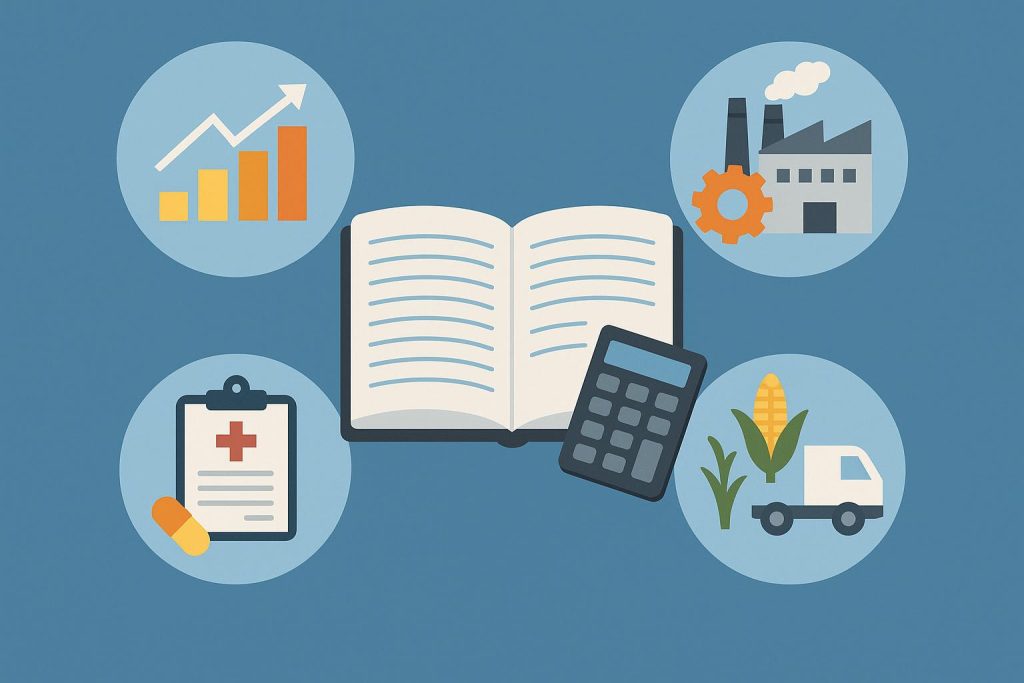
Every industry has its own rules, blind spots, and pressure points. You feel that every day. A manufacturer tracks inventory swings. A doctor’s office worries about insurance payments. A nonprofit watches every donated dollar. One set of accounting steps does not fit all. You need numbers that reflect your world, not a generic template. That is where certified public accounting services adjust their work to match your daily realities. They study your revenue patterns. They track your costs in clear groups. They flag risk before it grows. As a result, you gain clean records, fewer shocks, and stronger decisions. If you work with a CPA in Princeton, NJ, you can expect careful attention to both local rules and your industry’s demands. This blog explains how strong accounting support shapes itself around your work, so you stay steady, informed, and ready for the next hard choice.
Why one size never fits all
Your business sits inside a web of tax rules, labor laws, and reporting demands. A restaurant counts tips and food waste. A tech startup tracks stock options and software costs. A construction firm manages long projects and change orders. Each path creates different risks and chances.
The Internal Revenue Service explains that some industries use special methods for income and cost reporting. These rules affect when you pay tax, how you show income, and how you plan for cash needs.
A certified public accountant reads these rules and then shapes them to your daily operations. You gain numbers that match how you work. You also cut the chance of penalties, missed refunds, or painful audits.
Core ways CPAs adapt to your industry
Strong accounting support changes in three main ways.
- It adjusts your chart of accounts.
- It tunes your revenue and cost tracking.
- It sets controls that fit your risk.
Your chart of accounts is the list of buckets where every dollar lands. When that list matches your industry, your reports stop feeling vague. You can see which parts of your work carry you and which ones drain you.
Examples across common industries
Each sector carries its own demands. These show how a CPA shapes services to fit you.
- Manufacturing. You face raw materials, work in process, and finished goods. A CPA helps you track standard costs, scrap, and overhead. You see the true unit cost and profit by product line.
- Healthcare. You juggle insurance claims, patient balances, and write-offs. A CPA builds reports around payer mix, denial rates, and days in accounts receivable. You see where cash gets stuck.
- Nonprofits. You answer to donors, grant makers, and boards. A CPA sets up fund accounting, restricted gifts, and program cost tracking. You show that each dollar supports your mission.
- Construction. You live with job costs, retainage, and long contracts. A CPA uses job cost tracking and percentage of completion methods. You see which projects earn money and which ones fall behind.
- Retail and restaurants. You handle fast sales, staff turnover, and thin margins. A CPA tracks inventory turns, menu or product mix, and labor as a percent of sales.
Comparison of industry focused CPA needs
| Industry | Key accounting focus | Common risk | Typical CPA response |
|---|---|---|---|
| Manufacturing | Inventory and cost of goods | Overstated profit from bad counts | Regular counts, cost reviews, variance reports |
| Healthcare | Billing and collections | Cash flow strain from slow payers | Tracking claim aging, denial trends, payer mix |
| Nonprofit | Restricted and unrestricted funds | Misuse of donor funds | Fund accounting and grant tracking |
| Construction | Job cost and contract income | Underbilled or overbilled jobs | Job cost systems and project profit reports |
| Retail / Restaurant | Inventory, margins, labor | Theft and waste | Controls over cash, counts, and staff shifts |
Adapting to tax, audit, and reporting needs
Tax rules change often. Some industries get credits or special deductions. Others carry strict rules on timing. A CPA tracks these shifts and then updates your plan. You see clear options before year-end instead of shocks after the fact.
Some industries also call for audits or reviews. Lenders may ask for these. Grant makers may require them. A CPA who knows your sector can test the right records with less strain on your staff. Your books then match standards from groups like the U.S. Government Accountability Office Yellow Book. You gain trust with banks, donors, and partners.
Three signs your CPA understands your industry
You can test the fit of your CPA with three simple checks.
- They ask about your top three money worries and use your words in the plan.
- They show reports that match how you make choices, such as by job, unit, or program.
- They warn you about common risks in your industry before you face them.
When these pieces are present, you can feel it. Meetings move faster. Questions feel sharper. You spend less time explaining basics and more time planning next steps.
How tailored CPA support helps your daily life
Strong accounting is not only for year-end. It shapes every week. When your CPA adapts to your industry, you gain three steady supports.
- Clear cash view. You see when money comes in, when it goes out, and where you may fall short.
- Early warning signals. You spot trends in costs, delays, or staff hours before they turn into crises.
- Stronger talks with partners. You walk into bank or board meetings with proof and plain reports.
This calm control helps you sleep better. It also lets you focus on service, products, and staff instead of worrying about every new rule.
Next steps to protect your business
You do not need to turn into an accountant. You do need a CPA who respects how your industry works. Start by listing your three hardest money problems. Then ask how your current reports speak to each one. If they do not, that is your signal. It is time to ask for industry-focused support.
With the right help, your books stop being a burden. They become a clear story of where you are, what hurts, and what can grow. You gain the power to make hard choices with less fear and more control.

