


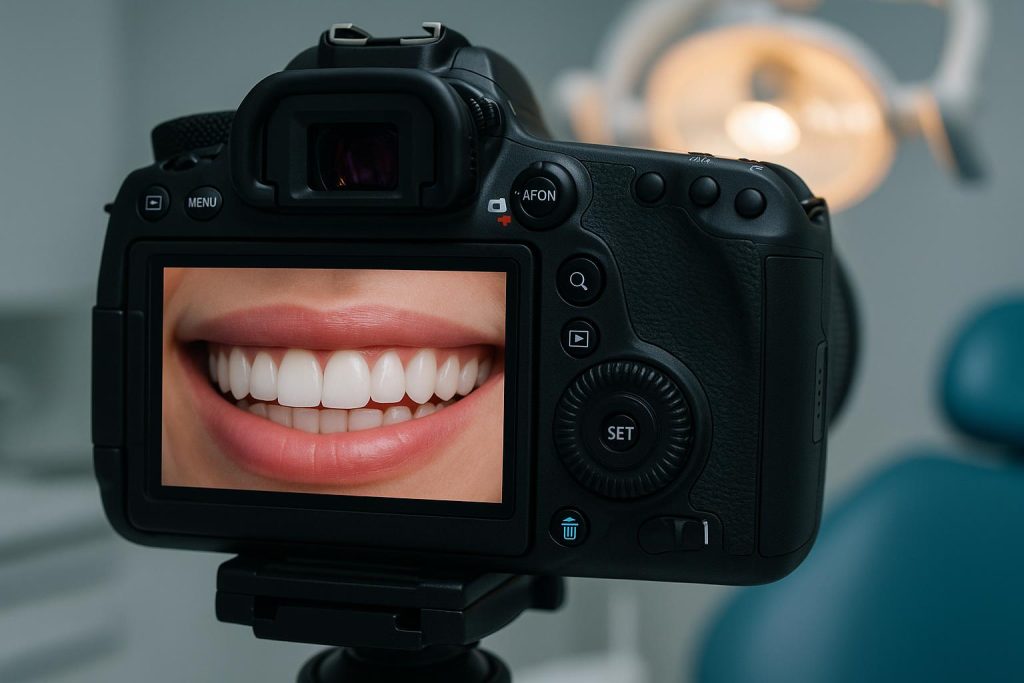
Dental photos are changing how you talk about your smile. In many consults, you no longer guess about color, shape, or alignment. You see clear images on a screen and understand your teeth in a new way. Then you can ask sharp questions and choose treatment with less fear. Today a family dentist in Plainville, MA can use photos to track changes, spot early damage, and plan cosmetic work with care. You see the before and after options. You see small cracks or stains that a mirror hides. You also gain proof of progress after whitening, bonding, or veneers. This honest view can calm worry and build trust. It can also protect your time and money. When you see what your dentist sees, you share control. You stop feeling lost. You start making strong choices for your smile and your health.
What Dental Photography Really Is
Dental photography is simple. Your dentist uses a camera to take close-up photos of your teeth, gums, and bite. Some photos show your full smile. Other photos zoom in on one tooth.
Most offices use three basic tools.
- A small digital camera or phone camera
- An intraoral camera that fits inside your mouth
- Strong lights and mirrors to keep each shot clear
The camera can show stains, chips, worn edges, and gum changes. It can also show how your upper and lower teeth meet when you bite. These photos turn small mouth details into large, clear images on a screen.
Why Photos Change Your Cosmetic Consult
Dental photos change the power balance in a consultation. You no longer hear only words. You see proof.
Photos help you in three key ways.
- You understand problems faster. A yellow patch or crack is obvious when it fills a screen.
- You see choices side by side. Your dentist can show sample photos of whitening, bonding, or veneers.
- You watch progress over time. You can compare your mouth today with photos from last year.
The result is less doubt and less shock. You walk into treatment with a clear mind. You know why the plan exists and what it should achieve.
How Photos Support Clear Decisions
Cosmetic care is personal. It affects how you smile at work, in photos, and at home. You need straight talk and clear proof before you say yes.
Dental photos support that in several ways.
- Color matching. Your dentist can hold shade guides beside high quality photos and choose a crown or veneer color that fits your other teeth.
- Shape planning. You can point to edges that look too sharp or too short and ask for changes before treatment starts.
- Risk checks. Photos can show thin enamel or gum loss that might affect cosmetic choices.
The National Institute of Dental and Craniofacial Research explains that enamel loss and gum disease often stay silent at first. You may not feel pain until damage grows. Clear images help you see these early signs and plan safer cosmetic care.
Comfort for Anxious Patients and Families
Many adults carry fear from past dental visits. Children often copy that fear. Photo-based consults can soften that reaction.
Instead of lying back and waiting, you sit up and look at a screen. You and your child can point, ask, and talk. The mouth becomes less unknown and less scary.
Dental photos also help families plan together.
- Parents can see crowding or wear in a child’s teeth.
- Teens can see how whitening or aligners might change their smile.
- Older adults can track wear on old fillings or crowns.
When everyone sees the same image, arguments fade. You move from “I think” to “We see”. That shift can lower stress and avoid rushed choices.
Comparing Traditional Consults and Photo-Based Consults
The table below shows how dental photos change a typical cosmetic visit.
| Consult Feature | Traditional Consult | Photo Based Consult |
|---|---|---|
| How problems are shown | Spoken explanation and small hand mirror | Large photos on screen with clear zoom views |
| Your role in planning | Mostly listening | Active review, questions, and photo marking |
| Understanding of options | Verbal descriptions | Side by side images and sample cases |
| Tracking progress | Memory and written notes | Time-stamped photo sets before and after care |
| Emotional impact | More guesswork and doubt | More clarity and shared control |
How Photos Help Protect Your Health
Cosmetic plans should never ignore health. A bright smile means little if your gums bleed or your bite hurts. Dental photos help your dentist watch for silent problems while planning cosmetic work.
Photos can show.
- Red or swollen gums between teeth
- White spots that might mark early decay
- Hairline cracks near old fillings
- Uneven wear on teeth that might signal grinding
The Centers for Disease Control and Prevention notes that untreated cavities and gum disease remain common in children and adults. You can review data and tips at the CDC oral health page at CDC oral health fast facts. When your dentist combines those public health lessons with sharp photos, you gain a strong safety net around cosmetic plans.
What to Expect at a Photo-Based Cosmetic Consult
Your next cosmetic visit may follow a simple path.
- Short talk about your goals. You share what you like and do not like about your smile.
- Photo set. Your dentist or assistant takes photos of your smile, bite, and close-ups.
- Screen review. You sit up and look at the photos together. You ask questions as you go.
- Plan options. Your dentist outlines one or more paths, such as whitening, bonding, or orthodontic care.
- Next steps. You agree on a plan, cost, and timeline. The photo set becomes your baseline record.
You can also ask for copies of your photos. Many offices can share them through a secure portal or print a few key shots. That record can help if you seek a second opinion.
How to Use Photos to Speak Up
Clear photos open the door. You still need to walk through it. During your consult, use the images to speak up.
- Point to any tooth that bothers you. Ask what can be done.
- Ask your dentist to show where the highest risk spots sit.
- Request a photo after each major step in a cosmetic plan.
This habit turns you into a partner. You stop feeling like a passive patient who must accept whatever is said. You become a person with proof in hand who can say yes or no with strength.
Taking the Next Step
Dentistry now offers more than drills and quick talks. With dental photography, your cosmetic consult can feel clear, calm, and shared. You see what needs care. You see what is possible. You see what changes over time.
When you sit in the chair, ask one direct question. “Can we look at photos of my teeth together before we plan anything?” That one request can change the entire visit and support better choices for your smile and your health.

