
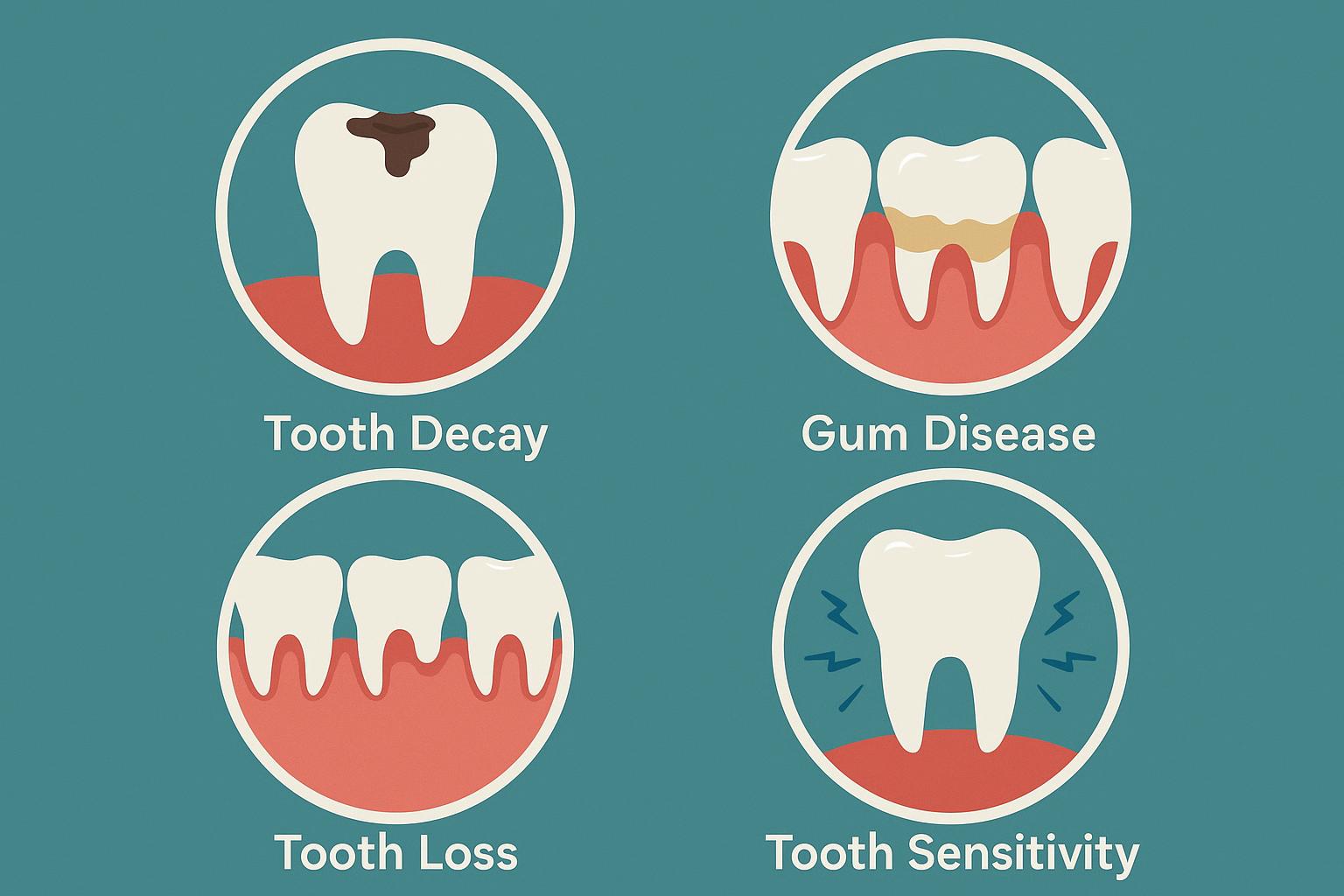
Your mouth affects how you eat, speak, and connect with people. When you ignore small problems, they grow into pain, cost, and stress. Preventive dentistry stops that chain. It focuses on simple steps that keep your teeth and gums strong so you avoid common oral issues before they start. Regular cleanings, checkups, and home care protect you from four frequent threats. These are cavities, gum disease, worn teeth, and infections. Each one can lead to tooth loss and health problems in other parts of your body. You might feel fine today. Yet hidden damage can spread without clear warning. A trusted dentist in Pacific Grove, CA can spot early signs and guide you toward habits that protect you. This blog explains the four common problems and how preventive care shuts them down early. You deserve a mouth that feels steady, clean, and pain-free.
1. Cavities: Tiny Holes That Grow Into Big Problems
Cavities start small. Bacteria in your mouth feed on sugar. Then they make acid that eats away at your enamel. Over time, a soft spot forms. That soft spot turns into a hole. You may not feel it until the decay reaches the inner layers of the tooth.
Preventive care targets cavities in three ways.
- Professional cleanings remove sticky plaque you miss with brushing.
- Fluoride strengthens enamel, so acid has less power.
- Dental sealants cover the grooves in back teeth where food hides.
You still need daily habits. Brush twice a day with fluoride toothpaste. Floss once a day. Limit sugary snacks and drinks. Choose water as your main drink. When you pair these habits with regular checkups, cavities lose their chance to grow.
2. Gum Disease: Silent Damage To Your Support System
Gum disease attacks the support system that holds your teeth. It often starts with red or bleeding gums. Many people see blood when they brush and think it is normal. It is not. Bleeding is a warning sign.
Gum disease has two main stages.
- Gingivitis. Gums are swollen and bleed easily. At this stage, damage is reversible.
- Periodontitis. The infection reaches deeper tissues and bone. Teeth can loosen and fall out.
Preventive visits allow your dentist to measure your gums and clean under the gumline. This stops plaque from hardening into tartar. Tartar scrapes and irritates the gums. Home care matters here, too. Brush gently along the gumline. Floss to remove the film between teeth.
Gum health links to body health. Research shows connections between gum disease and heart disease, diabetes, and pregnancy problems. You can read more from the Centers for Disease Control and Prevention.
3. Worn Teeth: Grinding, Clenching, and Everyday Use
Your teeth work hard every day. You chew, bite, and sometimes grind without knowing. Over time, this can wear down the enamel. The teeth look flat or chipped. They may feel sensitive to hot or cold. Jaw pain or morning headaches can appear.
Common causes include three patterns.
- Nighttime grinding during sleep.
- Daytime clenching during stress.
- Using teeth as tools to open packages or hold objects.
Preventive care focuses on early spotting. Your dentist can see wear and check your bite. You may need a custom night guard. This simple device fits over your teeth during sleep. It spreads pressure and shields the enamel. You also gain guidance on stress relief and safe habits. You teach your jaw to rest with your lips together and teeth apart.
4. Infections And Abscesses: Hidden Threats Under The Surface
When decay or injury reaches the center of the tooth, the nerve can become infected. An untreated infection can form an abscess. That is a pocket of pus. You might feel sharp pain, swelling, or a bad taste. Sometimes you feel nothing until the infection spreads.
Preventive visits help avoid this stage. Regular X-rays reveal deep decay, cracks, or bone loss before you feel pain. Early treatment can save the tooth. In some cases, a root canal or extraction is needed. When you act early, the treatment is simpler and less costly.
Untreated oral infections can affect your general health. Bacteria can reach other organs. The National Institutes of Health shares research on oral health and whole body health.
How Preventive Dentistry Changes Your Risk
The table below shows how routine preventive steps change your risk for the four common issues. Risk levels are general. Your own risk depends on your habits, health, and family history.
| Preventive Step | Cavities | Gum Disease | Worn Teeth | Infections |
|---|---|---|---|---|
| Twice daily brushing with fluoride toothpaste | Large risk drop | Moderate risk drop | Small risk drop | Moderate risk drop |
| Daily flossing | Moderate risk drop | Large risk drop | No direct change | Moderate risk drop |
| Regular dental cleanings and exams | Large risk drop | Large risk drop | Moderate risk drop | Large risk drop |
| Night guard for grinding | No direct change | No direct change | Large risk drop | Moderate risk drop |
| Limit sugary drinks and snacks | Large risk drop | Moderate risk drop | No direct change | Moderate risk drop |
Simple Daily Steps For You And Your Family
You protect your mouth with three simple daily steps.
- Brush every morning and night for two minutes.
- Floss once a day to clean where the brush cannot reach.
- Choose water, milk, and plain snacks most of the time.
Then add regular dental visits. Most people need a checkup and cleaning every six months. Some need care more often. Children, pregnant people, and those with chronic diseases may face a higher risk. Your dentist will set a schedule that fits your needs.
Take The Next Step Toward A Steady, Pain Free Mouth
Small daily choices protect you from cavities, gum disease, worn teeth, and infections. You gain comfort, confidence, and lower costs over time. You also protect your heart, blood sugar, and general health. Preventive dentistry is not extra. It is basic self-care.
Schedule a checkup, ask clear questions, and follow a simple home routine. Your future self will feel the difference every time you eat, speak, and smile without fear.
