
You might be at the point where you are tired of working around a missing tooth every time you eat, smile for a photo, or meet someone new. Maybe you have tried a partial denture that never quite feels like a part of you, or you are worried that more teeth will start to fail if nothing changes. It is common to feel a mix of embarrassment, frustration, and fear about what comes next, and talking with a periodontist in Bay Shore, NY can help you understand your options and take the next step with confidence.
Because of this tension, you may be wondering if dental implants are worth the stress, the time, and the cost. You might have heard that the process is long or painful, and you may not know what actually happens from the first visit to the final new tooth. That uncertainty alone can be exhausting.
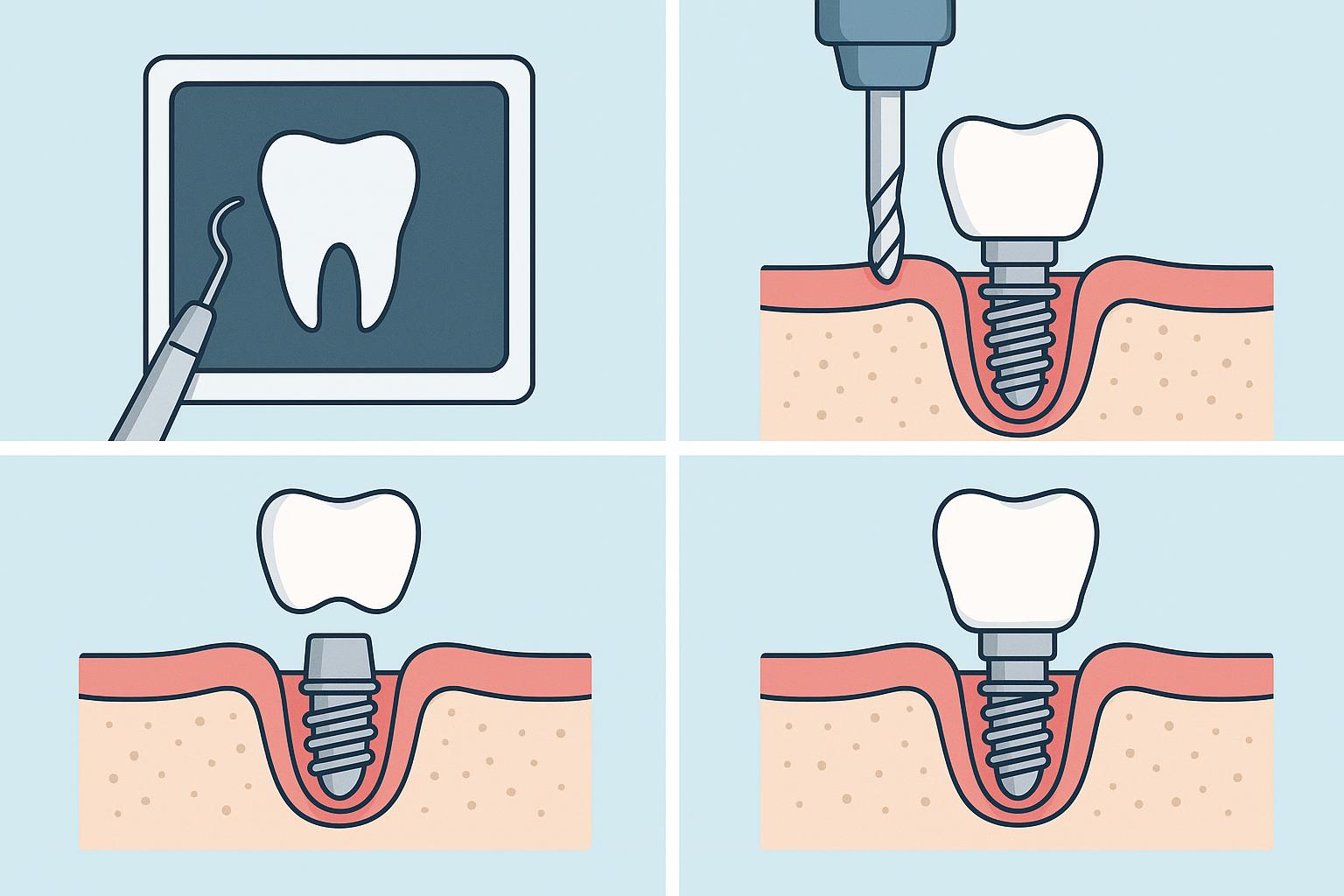
Here is the simple overview. The 4 essential steps in the dental implant process are: a careful evaluation, the implant placement surgery, healing and bone integration, and finally the custom crown or restoration. Each step has a clear purpose. When done with a skilled periodontist or implant dentist, they work together to give you a stable, natural looking tooth that you can trust.
So where does that leave you right now. It leaves you with options, and with a path that can be broken into human sized steps instead of one overwhelming decision.
Why does losing a tooth feel so disruptive in daily life?
Tooth loss is not just about appearance. It affects how you chew, how you speak, and how you feel about yourself in social or professional settings. You may find yourself avoiding certain foods, smiling with your lips closed, or planning your day around when you can clean or adjust a removable denture.
There is also a quiet worry in the background. You might have heard that bone can shrink where a tooth is missing, that nearby teeth can start to tilt, or that your bite can change over time. These are not imaginary fears. They are real concerns that periodontists and implant dentists see every day.
This is where the idea of dental implant treatment starts to sound appealing. Implants can replace the root of a missing tooth, support a crown that looks like your own tooth, and help preserve bone in that area. But the unknowns can still feel heavy. How long will it take. Will it hurt. What if it fails. What if you spend the money and still cannot chew the way you want.
To ease some of that worry, it helps to walk through each step of the process, with clear expectations and real world context.
Step 1: How does the initial evaluation shape your treatment plan?
The first step in any dental implant procedure is not surgery. It is information. Your periodontist or implant dentist will review your medical history, your medications, and your goals. They will examine your mouth, gums, and bite, and usually order imaging such as X rays or a 3D scan to measure your bone.
Why does this matter so much. Because not every site is ready for an implant right away. Some patients have active gum disease that must be treated first. Others have bone loss that may require a graft. Some have health conditions or habits, like uncontrolled diabetes or heavy smoking, that increase the risk of complications.
At this stage, you should feel heard. A good clinician will ask how you feel about removable teeth, what foods you miss, and what you hope life will look like after treatment. You are not just a set of X rays. You are a person planning for years ahead.
If you like to read medical explanations, resources such as the Mayo Clinic overview of dental implant surgery can help you understand the clinical side of this first step.
Step 2: What really happens during dental implant surgery?
Once planning is complete, the second step is placement of the titanium implant into your jawbone. This sounds intimidating, which is why many people delay. In reality, patients often report that implant placement is more comfortable than they expected, and sometimes easier than a tooth extraction.
During the procedure, the area is numbed. You may also have sedation if you and your provider decide it is appropriate. The periodontist creates a small opening in the gum, prepares a precise site in the bone, and gently places the implant. The gum is then closed or shaped around a small healing cap.
After surgery, mild swelling or soreness is common for a few days. Most people manage this with over the counter pain relief and rest. You will receive clear instructions about cleaning the area and what to eat. This is not the final tooth yet. This is the foundation.
Step 3: Why is healing time so important for implant success?
The third step is the quiet part, and it is easy to underestimate. Over several weeks to a few months, your bone grows and fuses with the implant surface. This process, called osseointegration, is what gives implants their strength and stability.
During this time, you may wear a temporary tooth for appearance, depending on the location and your specific case. Your dentist will ask you to avoid chewing hard foods directly on the implant site for a while, to protect healing.
It can be tempting to want everything finished quickly. However, rushing this step increases the risk that the implant will not integrate properly. A stable, long lasting result is almost always worth a little patience now.
As the healing progresses, your provider may take impressions or digital scans to prepare for the final crown or bridge. They will also monitor the gums around the implant, since healthy gum tissue supports both function and appearance.
Step 4: How does the final crown bring everything together?
The fourth step is when you finally see the payoff. Once the implant is secure, an abutment is attached, which connects the implant to the visible tooth. Then a custom crown, bridge, or denture is designed to match your natural teeth in shape and color.
Your dentist will check your bite carefully so the new tooth shares chewing forces properly. This protects both the implant and the surrounding teeth. When done well, many people forget which tooth is the implant, because it feels and functions like a natural part of their smile.
Even at this stage, the process is not just technical. You can talk with your provider about how the tooth looks when you speak and smile, and make small adjustments if needed. The goal is not just to fill a space. It is to restore confidence when you eat, talk, and laugh.
How do implants compare to other tooth replacement options?
Choosing between implants, bridges, and dentures can feel overwhelming. A simple side by side view can help you see where implants shine, and where another option might still make sense depending on your situation.
| Option | Stability when chewing | Impact on nearby teeth | Bone preservation | Typical longevity with care |
|---|---|---|---|---|
| Single dental implant with crown | High. Feels close to a natural tooth. | No need to grind down healthy teeth. | Helps maintain bone where the tooth is missing. | Often 10+ years. Many last decades. |
| Traditional fixed bridge | Good stability. | Requires reshaping neighboring teeth for support. | Does not prevent bone loss under the missing tooth. | Often 7 to 10 years before replacement or repair. |
| Removable partial denture | Varies. Can feel loose or move with chewing. | Clips or rests on other teeth, which can wear them over time. | Does not stop bone shrinkage in the missing areas. | May need adjustments or replacement every few years. |
Studies and expert reviews from sources such as the Columbia University College of Dental Medicine dental implant resource support what many patients experience in daily life. Implants often offer the most natural feel and long term stability when conditions are right, especially when placed and restored by an experienced periodontist and implant dentist.
What can you do right now to move forward with confidence?
1. Clarify your goals and limits
Before any consultation, take a quiet moment to list what matters most to you. Is it chewing comfort. Appearance. Avoiding removable teeth. Budget. Fear of surgery. Write down your top three priorities and any deal breakers. Bring this list to your appointment. It will help your provider shape a plan that fits your life, not someone else’s idea of perfection.
2. Prepare questions for a periodontist or implant dentist
Use your anxiety as fuel for good questions. Ask about their experience with cases like yours, what imaging they use, expected healing times, costs and payment options, and what support is available if complications arise. Ask them to walk you through each of the 4 essential steps in the implant process in your specific case. You deserve clear, unhurried answers.
3. Plan for healing and long term care
Think beyond the day of surgery. Arrange for time to rest, soft foods you enjoy, and any help you might need at home. Ask how to clean around the implant, what kind of toothbrush or tools they recommend, and how often you should return for checkups. Implants are strong, but they still need the same daily care and professional visits as natural teeth.
Where does this leave you today?
You might still feel nervous, and that is completely normal. The idea of surgery, time off work, and investing money in your mouth is not small. At the same time, you now know that the process is structured, predictable, and focused on one clear goal. To give you a secure tooth replacement that feels like a part of you.
Whether you are missing one tooth or several, talking with a skilled periodontist and implant dentist is often the most helpful next move. You are not committing to treatment just by asking questions. You are gathering the information you need to decide what is right for you.
Your smile, your comfort when you eat, and your confidence in daily life are worth thoughtful care. One honest conversation can be the first step toward that change.
