
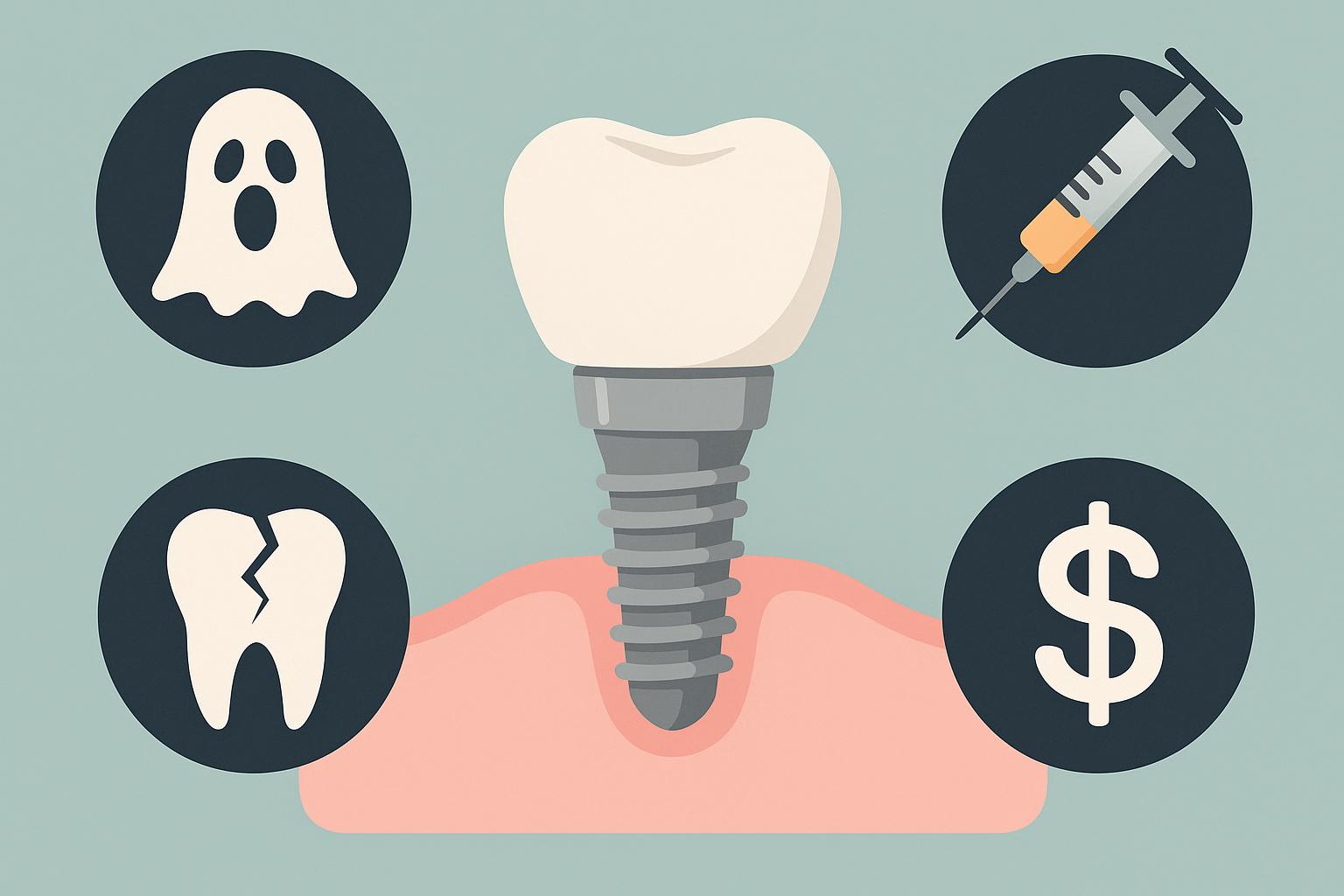
You might feel a knot in your stomach when you hear the words “dental implant.” You are not alone. Many people fear pain, high costs, surgery, or “something going wrong” that they cannot control. These fears can freeze you in place. They keep you from fixing missing teeth and from feeling able to eat, speak, or smile in public. Your fear deserves respect, not judgment. A Lower Manhattan dentist hears these worries every day and answers them with clear steps, plain language, and careful planning. In this blog, you will see four common fears about dental implants and how dentists respond. You will see how they reduce pain, control risk, explain costs, and support you through each visit. You will not get pressure. You will get facts. Then you can decide with a clear head and a calmer heart.
Fear 1: “The procedure will hurt too much”
Pain sits at the top of most people’s minds. You might picture sharp tools and long hours in the chair. That picture is old. Modern care focuses on comfort.
Dentists use:
- Local numbing medicine so you feel pressure but no sharp pain
- Medicine by mouth or by nose to help you feel calm
- Short visits that break care into small steps
First, your dentist checks your mouth and health history. Next, you get a clear plan that explains each step. Then the dentist numbs the spot and tests it before starting. You can raise your hand at any time. The team stops if you feel pain.
The National Institute of Dental and Craniofacial Research explains that implant care has a strong track record for comfort and function when planned well. You may feel soreness after treatment. You can expect it to feel like a pulled tooth or deep bruise, not sharp pain. Dentists give clear tips for ice, rest, and medicine so you can sleep and eat soft food.
Fear 2: “Dental implants are not safe for me”
Surgery can trigger fear of risk or loss of control. You may worry about infection, healing, or your age. You may wonder if you have “too many problems” to be safe.
Here is how dentists protect you:
- They review your full health history
- They order pictures of your jaw to measure the bone
- They work with your doctor if you have heart, bone, or immune problems
Many people with diabetes, bone loss, or past gum disease can still receive implants with extra planning. Some need bone grafts or staged care. Some need a change in smoking habits. A few people are not good candidates. In that case, your dentist explains clear options like bridges or partial dentures.
The Centers for Disease Control and Prevention points out that strong mouth care lowers infection risk. Clean tools, trained staff, and clear home care instructions work together to guard your health.
Fear 3: “The cost will crush my budget”
Money fear can feel heavy. You may feel guilty for even thinking about care. You may fear surprise bills or pressure to choose the most costly plan.
Most dentists now give written plans that show:
- The cost of each step
- What insurance may pay
- What you pay now and what you can spread out
Many offices offer payment plans. Some use outside finance companies. Some help you phase treatment over time so you can save between visits.
This table gives a simple comparison of common tooth replacement choices. Costs are rough national ranges per tooth. Your cost can differ based on city, insurance, and your health.
| Option | Typical initial cost per tooth (USD) | Average lifespan | Bone loss over time | Common follow up costs |
|---|---|---|---|---|
| Dental implant with crown | 3,000 to 5,000 | 15 years or longer | Low | Checkups and cleanings |
| Fixed bridge | 2,000 to 4,000 | 7 to 10 years | Moderate | Replacement bridge |
| Removable partial denture | 1,000 to 2,000 | 5 to 7 years | Moderate to high | Relines and repairs |
| Do nothing | 0 now | Not applicable | High | Future extractions and more complex care |
An implant can cost more at first. Yet it often lasts longer and protects nearby teeth. Doing nothing can lead to shifting teeth, bite problems, and higher costs later. You deserve clear numbers so you can weigh short-term strain against long-term peace.
Fear 4: “The process seems confusing and long”
Uncertainty feeds fear. You might hear different stories from family, social media, and old articles. You may not know how many visits you need or how long you will wait for a tooth.
Most implant plans follow three clear stages.
First stage
- Consult visit and exam
- X rays or 3D scan
- Review of health and medicine list
- Simple talk about your goals and options
Second stage
- Implant placement visit with numbing
- Short rest at home
- Healing time that often runs from 3 to 6 months
Third stage
- Impressions or scans for the crown
- Fitting visit to adjust the bite
- Instruction for cleaning and follow up
Your dentist may adjust this plan based on your jaw, gums, or number of missing teeth. Children usually do not receive implants until growth has ended. You can review age and tooth loss facts with the National Institute of Dental and Craniofacial Research at https://www.nidcr.nih.gov/research/data-statistics/tooth-loss.
How you can take the next small step
You do not need to decide today. You only need your next step. You can start with three simple actions.
- Write your top three fears or questions on paper
- Call a dentist and ask for a consult that focuses on questions, not treatment
- Bring a trusted person to the visit for support
Your fear has a reason. Your missing tooth has a cost. You deserve clear facts, kind care, and a plan that fits your life. With the right dentist, implants stop being a source of dread and become one more tool to help you eat, speak, and smile with steady confidence.
