
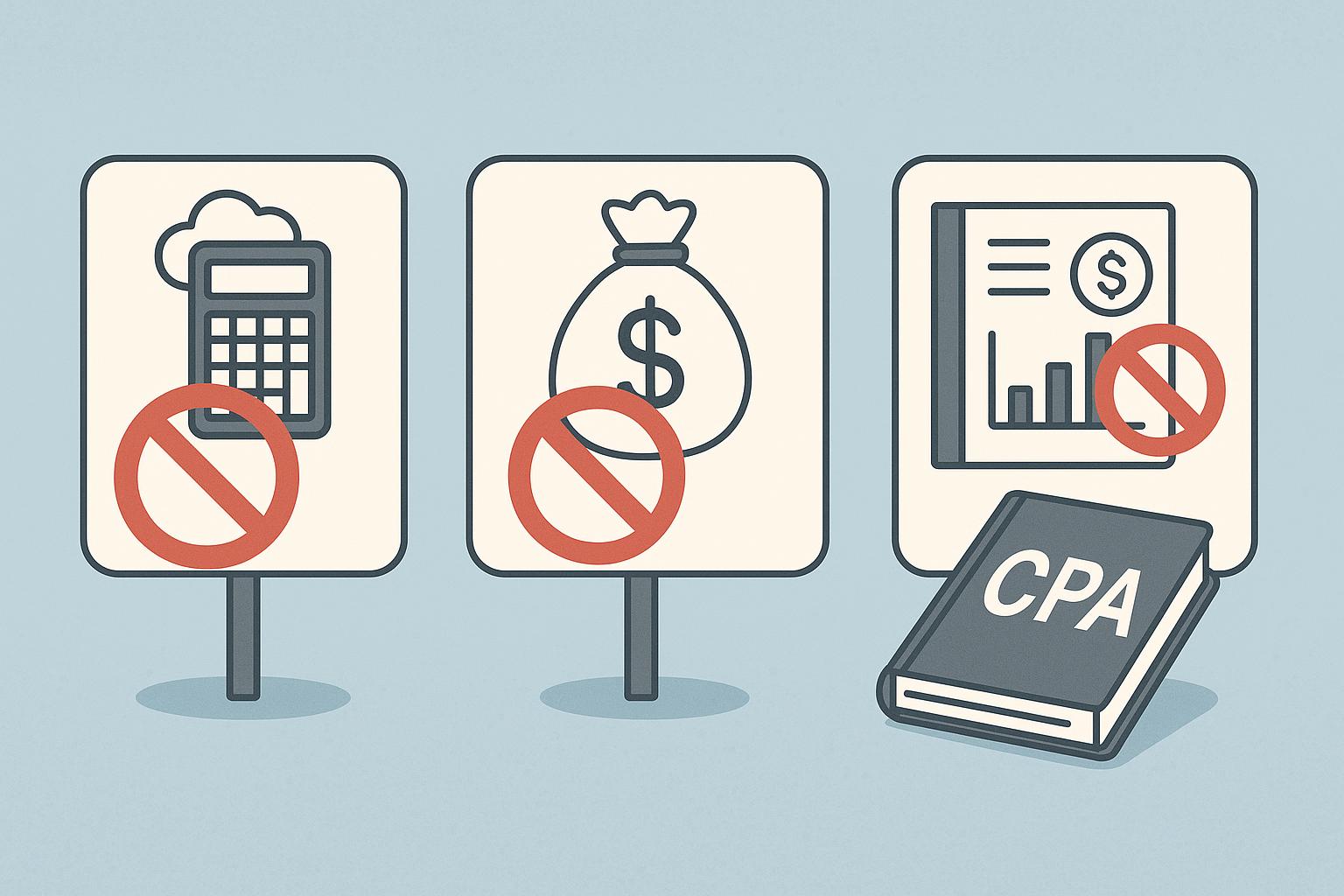
You might be feeling a mix of confusion and pressure right now. Maybe tax season is creeping up, your business books are a mess, or a letter from the IRS is sitting unopened on your desk. You have heard that working with a Certified Public Accountant who offers tax services in San Jose, CA could help, yet you also hear rumors. CPAs are only for the rich. They just do taxes. They are all the same, so picking one does not really matter.
Because of all this noise, you might feel stuck between doing nothing and making a choice you are not sure you can trust. That is an exhausting place to be. The good news is that much of this stress comes from myths about what CPAs actually do and who they are for. Once those myths are cleared up, the path forward usually gets much simpler.
Here is the short version. A CPA is a licensed professional who has met strict education, exam, and ethics standards. They do far more than tax returns. They help people and businesses plan, protect what they have built, and avoid costly mistakes. You do not need to be wealthy to benefit from one. You just need to be ready to get some structure and clarity around your money.
Myth 1: “CPAs Are Just Fancy Tax Preparers”
It often starts with a single pain point. A complicated tax return. A notice from a tax authority. A new business you are not sure how to structure. You think, “I guess I need a tax person,” and someone mentions a CPA. In your mind, that word becomes a fancier label for “the person who does my taxes once a year.”
The problem is that this narrow view can cost you real money and peace of mind. If you only see a CPA as a tax filer, you may call them too late, after decisions have already been made. For example, imagine you start a side business and choose a structure without advice. A year later, you learn that a different setup could have lowered your tax bill and protected your personal assets better. At that point, fixing it can be messy and expensive.
So what does a CPA really do? A licensed CPA is trained in accounting, financial reporting, tax, auditing, and business advisory work. State boards describe CPAs as trusted financial professionals who help with planning, compliance, and decision making. For example, the Virginia Board of Accountancy explains what a CPA is and the standards they must meet in its consumer overview of CPAs.
Because of this broader training, a CPA can help you
- Plan ahead so your taxes are a byproduct of good decisions, not damage control
- Read and understand financial statements
- Set up bookkeeping and internal controls for your business
- Evaluate big choices, like buying property or hiring employees
So where does that leave you? If you are only using a CPA to plug numbers into a tax software once a year, you are using a fraction of what they can offer.
Myth 2: “Only Wealthy People Or Big Companies Need CPAs”
You might be thinking, “I am not a corporation. I do not own a dozen rental properties. I just want to stop feeling behind with money.” It is easy to assume CPAs are reserved for high net worth families and large businesses, and that belief keeps many people from even making a first call.
This myth hits you in subtle ways. You put off asking questions because you do not want to “waste” a professional’s time. You try to handle complex things on your own, like multi-state income, stock options, or a growing side business. You may tell yourself that once you make more money, then you will “graduate” to a CPA. In reality, waiting can be what holds you back from reaching that next level.
State accountancy boards emphasize that CPAs serve a broad range of individuals and small businesses. For instance, the Pennsylvania Board of Accountancy’s CPA snapshot shows how widespread and accessible the profession is. Many CPAs routinely work with teachers, nurses, freelancers, retirees, and first time business owners.
Consider a few “ordinary” situations where a CPA can quietly save you time and money.
- You start driving for a rideshare app and are unsure how to handle expenses and quarterly taxes.
- You inherit some investments and do not know what that means for your tax return.
- You and a partner open a small online shop and want to keep personal and business money separate.
None of these require you to be wealthy. They do require clear guidance. That is where professional CPA support becomes less of a luxury and more of a practical tool.
Myth 3: “All CPAs Are The Same, So Choosing One Does Not Matter”
When you finally decide you might need help, another worry often appears. You open a search page and are hit with a wall of names and firms. It is easy to think, “They all passed the same exam. I will just pick whoever is cheapest or closest.”
The risk here is not usually about honesty. CPAs are held to strict ethics and licensing rules. It is about fit. If you choose someone whose strengths do not match your needs, you may feel unheard, rushed, or stuck with generic advice that does not match your life.
Consumer guides from state boards, such as the California Board of Accountancy’s CPA consumer booklet, encourage you to ask questions and understand a CPA’s experience and focus. Some focus on small businesses, others on individual tax planning, others on audits or specific industries.
Imagine you are a contractor with several crews. You pick a CPA who mostly works with retirees on simple returns. They may be honest and kind, yet they might not be the best person to help you structure your jobs, track project costs, and plan for growth. The opposite is also true. A CPA who only works with complex corporate audits might not be the right guide for a newly divorced parent filing a return on their own for the first time.
So, where does that leave you? It means you have permission to be selective. The myth that “a CPA is a CPA” can keep you from finding someone who matches your situation and communication style.
Should You DIY Or Work With A CPA? A Simple Comparison
Once these myths start to fall away, a new question usually appears. “Do I really need a CPA for this, or can I handle it myself?” The answer depends on your comfort level, the complexity of your finances, and your tolerance for risk.
The table below offers a simple way to compare trying to manage things on your own with working with a Certified Public Accountant.
| Situation | DIY Approach | Working With A CPA |
|---|---|---|
| Simple yearly tax return with one job and no major changes | Tax software may be enough, but you rely on prompts and your own answers | CPA can confirm you are not missing credits and set you up for future planning |
| New small business or side gig | High risk of mixing personal and business funds and missing estimated taxes | CPA helps choose structure, set up books, and avoid penalties |
| Big life events like marriage, divorce, inheritance, or selling a home | Easy to overlook timing issues and special rules that affect your taxes | CPA walks you through options and helps you plan before you act |
| Letters or audits from tax authorities | Stressful, time consuming, and risky to respond without guidance | CPA interprets notices, represents you, and works to reduce exposure |
| Long term planning and financial clarity | Usually reactive, focused on “getting through this year” | Ongoing, proactive advice around taxes, cash flow, and goals |
This comparison is not meant to scare you. It is meant to show where a CPA service tends to add the most value, especially when things start to feel complicated or high stakes.
Three Practical Steps You Can Take Right Now
You do not need to have everything figured out before you talk to a CPA. You just need a starting point. Here are three steps you can take today, even if you are still uncertain.
1. Clarify your main worry in one sentence
Before you reach out for help, write down the one thing that keeps circling in your mind. It might be “I am afraid I am doing my taxes wrong” or “I do not understand my business cash flow” or “I got a letter and I am scared to open it.” This single sentence will guide the conversation and keep you from feeling scattered when you speak with a professional.
2. Gather a small “snapshot” of your financial life
You do not need perfection. Start with the basics you already have. Last year’s tax return. Recent pay stubs. Bank or credit card statements for your business. Any letters from tax agencies. Having this small packet ready can turn a vague, stressful situation into something a CPA can quickly assess and prioritize.
3. Talk to more than one CPA and trust your gut
You are allowed to ask questions before you commit. Many CPAs offer short initial consultations. Pay attention to how you feel during those conversations. Do they explain things in plain language. Do they listen more than they talk. Do they seem to understand your type of work or life situation. You deserve someone who makes you feel calmer, not more confused.
Moving Forward With More Clarity And Less Fear
If you have carried these myths for a long time, it is normal to feel a bit of regret or frustration. You might wish you had reached out sooner, or wonder how much stress could have been avoided. Try to give yourself some grace. You made the best choices you could with the information you had.
Now you know that 3 common myths about Certified Public Accountants debunked
The next move does not need to be dramatic. It can be as small as writing down your main concern and reaching out to a qualified CPA for a conversation. One honest talk with the right person can turn a situation that feels overwhelming today into a plan you can actually follow tomorrow.
