
Key Takeaways
- RSV and whooping cough are both respiratory infections, but they are caused by different pathogens and require different approaches to treatment and prevention.
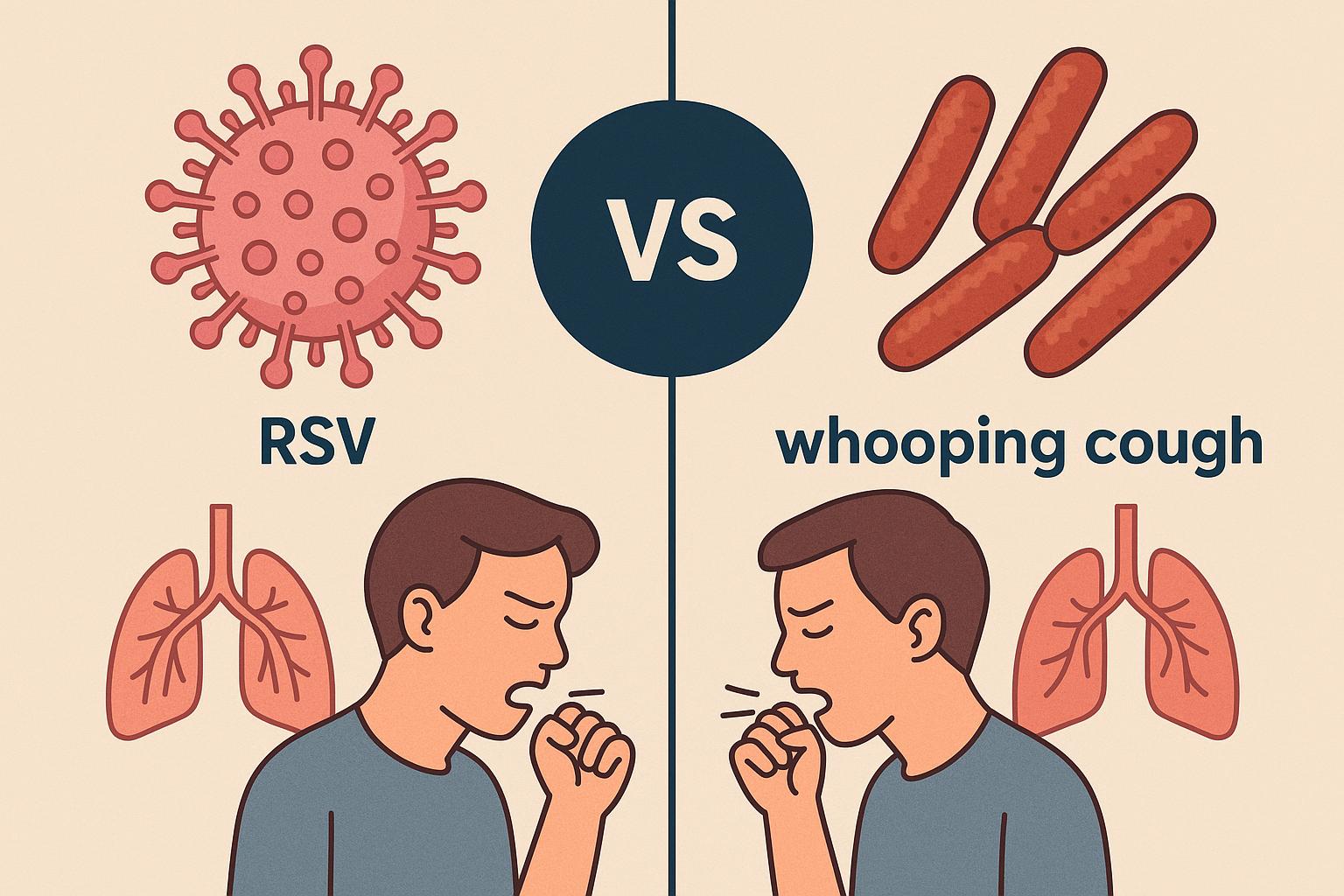
- RSV is caused by a virus and commonly produces cold-like symptoms, while whooping cough is a bacterial infection caused by Bordetella pertussis that can lead to severe, prolonged coughing fits.
- RSV is particularly concerning for infants, older adults, and people with certain underlying health conditions, while whooping cough can be especially dangerous for babies who are too young to be fully vaccinated.
- Both illnesses can spread through respiratory secretions, making good hygiene and avoiding close contact with infected individuals important prevention measures.
- RSV symptoms often include a runny nose, congestion, coughing, and wheezing, while whooping cough typically progresses to intense coughing attacks that may be followed by a high-pitched “whoop.”
- RSV is generally managed with supportive care, whereas whooping cough is treated with antibiotics that can reduce the severity and spread of the infection when given early.
- Vaccination is an important defense against whooping cough, while RSV prevention options are available for certain infants, older adults, and pregnant individuals based on current public health recommendations.
- Understanding the differences between these two respiratory illnesses can help families recognize warning signs and seek appropriate medical care sooner.
Understanding the Difference Between RSV and Whooping Cough
Respiratory illnesses can sometimes look similar, especially during the early stages of infection. However, RSV and whooping cough are two distinct conditions with important differences in their causes, symptoms, contagiousness, and treatment.
Knowing the differences between whooping cough vs rsv can help parents, caregivers, and adults recognize potential warning signs and understand when medical attention may be necessary. Although both infections can affect the respiratory system, they are caused by different types of pathogens and require different management strategies.
RSV, or respiratory syncytial virus, is a common viral infection that often causes mild cold-like symptoms. However, it can become serious in infants, older adults, and people with certain medical conditions. Whooping cough, also called pertussis, is a bacterial infection that can cause prolonged and severe coughing episodes.
Comparing these illnesses side by side makes it easier to understand how they differ and why prevention, diagnosis, and treatment are important.
RSV vs Whooping Cough: Causes and How They Spread
What Causes RSV?
RSV is caused by a virus that infects the respiratory tract. It spreads when respiratory secretions from an infected person come into contact with another person, often through coughing, sneezing, or touching contaminated surfaces and then touching the face.
The virus can spread easily in households, schools, daycare centers, and other environments where people are in close contact. Infants and young children are especially likely to encounter RSV because of their frequent exposure to other children.
Common ways RSV can spread include:
- Close contact with an infected person.
- Contact with respiratory droplets or secretions.
- Touching contaminated surfaces and then touching the eyes, nose, or mouth.
- Spending time in crowded indoor environments.
What Causes Whooping Cough?
Whooping cough is caused by the bacterium Bordetella pertussis. It spreads primarily through respiratory droplets released when an infected person coughs or sneezes.
One of the challenges with pertussis is that an infected person may spread the bacteria before realizing that they have whooping cough. Early symptoms can resemble an ordinary cold, allowing transmission to occur before the characteristic coughing fits develop.
This is particularly concerning for infants, who can develop serious complications after exposure.
Comparing RSV and Whooping Cough Symptoms
Common Symptoms of RSV
RSV often begins with symptoms that resemble a common cold. These may include:
- Runny nose.
- Nasal congestion.
- Cough.
- Decreased appetite.
- Fever.
- Wheezing.
In many people, RSV causes a mild illness that improves with time. However, infants and other high-risk individuals may develop more serious respiratory complications, including bronchiolitis or pneumonia.
Parents and caregivers should pay close attention to signs of breathing difficulty, dehydration, or unusual tiredness in young children.
Common Symptoms of Whooping Cough
Whooping cough typically begins with mild symptoms that may include:
- Runny nose.
- Mild fever.
- Occasional cough.
- Nasal congestion.
After the early stage, the illness may progress into severe coughing attacks. These episodes can happen repeatedly and may make it difficult for a person to breathe normally between coughs.
In some cases, a person may make a distinctive high-pitched sound when inhaling after a coughing fit. This sound is commonly referred to as a “whoop,” which is where the illness gets its name.
Other symptoms may include:
- Violent or repeated coughing fits.
- Vomiting after coughing.
- Exhaustion following coughing episodes.
- Difficulty breathing.
- Prolonged cough lasting several weeks.
Not everyone with whooping cough develops the classic whooping sound. Adults and vaccinated individuals may experience milder or less recognizable symptoms.
RSV vs Whooping Cough: Incubation and Illness Progression
The time between exposure and the appearance of symptoms can also help distinguish RSV from whooping cough.
RSV symptoms generally develop within a few days after exposure. The illness often starts with mild upper respiratory symptoms before potentially progressing to more significant breathing problems in vulnerable individuals.
Whooping cough generally has a longer incubation period. Early symptoms may be subtle and resemble a common cold. Over time, the cough can become increasingly severe and persistent.
The progression of each illness is different:
RSV:
- Often begins with cold-like symptoms.
- May progress to wheezing or breathing difficulties.
- Can be more severe in infants and older adults.
- Usually improves with supportive care.
Whooping cough:
- Often begins with mild cold-like symptoms.
- May progress to repeated, severe coughing fits.
- Can persist for several weeks.
- Requires medical evaluation and may require antibiotic treatment.
Because symptoms can overlap during the early stages, individuals should not rely solely on symptoms to determine which illness they have.
Who Is Most at Risk?
RSV Risks for Infants and Young Children
RSV can be especially serious for infants and young children. Babies with developing immune systems and smaller airways may have more difficulty handling respiratory infections.
Parents should watch for warning signs such as:
- Rapid or difficult breathing.
- Wheezing.
- Decreased fluid intake.
- Fewer wet diapers.
- Unusual sleepiness or weakness.
- Bluish or grayish skin, particularly around the lips or face.
Older adults and individuals with certain chronic medical conditions can also experience more severe RSV illness.
Whooping Cough Risks for Babies
Whooping cough is particularly dangerous for infants. Young babies may not develop the classic “whoop” and can instead experience breathing pauses or other serious complications.
Adults and older children may experience milder symptoms but can still transmit the infection to vulnerable infants.
This makes vaccination and early recognition especially important for parents, grandparents, caregivers, and anyone who regularly spends time around young children.
How RSV and Whooping Cough Are Diagnosed
Diagnosing RSV
Healthcare professionals may diagnose RSV based on symptoms and a physical examination. When testing is necessary, respiratory samples collected through a nasal swab may be used.
Testing may be particularly useful when a patient has significant respiratory symptoms or when knowing the specific cause of an illness will influence medical management.
Diagnosing Whooping Cough
Doctors may suspect whooping cough based on the patient’s symptoms, particularly a persistent or severe cough. Laboratory testing can also help confirm the presence of Bordetella pertussis.
A healthcare provider may consider:
- The duration and severity of the cough.
- Exposure to someone with pertussis.
- Vaccination history.
- Physical symptoms.
- Laboratory test results.
Because early whooping cough symptoms can resemble a common cold, seeking medical advice for a persistent or worsening cough is important.
Treatment: RSV vs Whooping Cough
How RSV Is Treated
There is no routine antibiotic treatment for RSV because it is caused by a virus. Treatment generally focuses on supportive care and managing symptoms.
Depending on the severity of the illness, supportive measures may include:
- Maintaining adequate hydration.
- Managing fever and discomfort with appropriate medications.
- Keeping nasal passages clear.
- Monitoring breathing.
- Seeking medical care if symptoms become severe.
Severe cases may require hospital-based treatment, including oxygen support or other respiratory assistance.
How Whooping Cough Is Treated
Whooping cough is a bacterial infection, so healthcare providers may prescribe antibiotics. Early treatment can help reduce the severity of the illness and limit the risk of spreading the infection to others.
People diagnosed with pertussis should follow their healthcare provider’s instructions carefully. Antibiotic treatment is especially important when protecting vulnerable individuals, such as infants and people with weakened immune systems.
Because treatment decisions depend on individual circumstances, anyone who suspects whooping cough should consult a healthcare professional.
Prevention: Protecting Your Family
Preventing respiratory infections requires consistent hygiene and awareness.
For RSV, helpful strategies include:
- Washing hands regularly.
- Avoiding close contact with people who are sick.
- Cleaning frequently touched surfaces.
- Keeping sick individuals away from vulnerable infants when possible.
- Following current medical guidance regarding available RSV prevention options.
For whooping cough, vaccination is one of the most important preventive measures. Routine childhood vaccination and recommended booster doses help reduce the risk of infection and transmission.
Additional prevention strategies include:
- Covering coughs and sneezes.
- Washing hands frequently.
- Avoiding close contact when experiencing respiratory symptoms.
- Seeking medical advice for persistent or severe coughing.
- Following public health recommendations regarding vaccination.
Protecting vulnerable family members requires everyone to take respiratory infections seriously, especially when babies or medically vulnerable individuals are involved.
When Should You Seek Medical Attention?
Although many respiratory infections are mild, certain symptoms require prompt medical evaluation.
Seek immediate medical attention for a child or adult experiencing:
- Severe difficulty breathing.
- Blue or gray coloring around the lips or face.
- Significant dehydration.
- Unusual confusion or difficulty staying awake.
- Breathing pauses.
- Severe or rapidly worsening symptoms.
Parents should also contact a healthcare professional if an infant develops concerning respiratory symptoms or has difficulty feeding because of breathing problems.
For adults and older children, a cough that persists for weeks, becomes increasingly severe, or occurs in repeated uncontrollable fits should be evaluated by a healthcare professional.
Final Thoughts: RSV vs Whooping Cough
RSV and whooping cough can both affect the respiratory system, but understanding their differences is essential. RSV is a viral infection that often causes cold-like symptoms but can become serious in infants, older adults, and high-risk individuals. Whooping cough is a bacterial infection known for prolonged, intense coughing episodes and can be particularly dangerous for young babies.
The key differences involve their causes, symptom patterns, treatment options, and prevention strategies. RSV is generally managed through supportive care, while whooping cough may require antibiotics. Vaccination remains an important tool for preventing pertussis, while RSV prevention measures are available for certain high-risk groups.
When respiratory symptoms become severe, persistent, or unusual, professional medical evaluation is the safest course of action. By understanding the differences between these two illnesses, families can recognize warning signs sooner, take appropriate precautions, and protect those who are most vulnerable.
FAQ
Is RSV the same as whooping cough?
No. RSV is caused by respiratory syncytial virus, while whooping cough is caused by the bacterium Bordetella pertussis. They have different causes, symptoms, and treatment approaches.
Which is more dangerous, RSV or whooping cough?
The severity of either illness depends on the person’s age and overall health. RSV can be particularly serious for infants and older adults, while whooping cough can pose a significant risk to young babies who are not fully vaccinated.
Can adults get RSV and whooping cough?
Yes. Adults can become infected with both illnesses. Symptoms may be milder in some adults, but they can still spread infections to vulnerable people.
How can I tell the difference between RSV and whooping cough?
RSV commonly causes cold-like symptoms, congestion, coughing, and sometimes wheezing. Whooping cough is more commonly associated with prolonged and intense coughing fits that may produce a high-pitched “whoop.”
However, symptoms can overlap, especially during the early stages, so a healthcare professional may be needed for an accurate diagnosis.
Does RSV require antibiotics?
Generally, no. RSV is caused by a virus, and antibiotics do not treat viral infections. Treatment typically focuses on supportive care unless a healthcare provider identifies another bacterial infection.
Does whooping cough require antibiotics?
Healthcare providers commonly use antibiotics to treat whooping cough. Early treatment may help reduce the severity of the infection and limit its spread to others.
How can parents protect babies from RSV and whooping cough?
Parents can reduce risk by practicing good hand hygiene, avoiding contact with sick individuals, keeping infants away from crowded environments when appropriate, and following recommended vaccination and preventive healthcare guidance.
When should I take my child to the doctor for respiratory symptoms?
Seek prompt medical care if a child has difficulty breathing, signs of dehydration, unusual sleepiness, breathing pauses, bluish or grayish skin, or symptoms that are rapidly worsening.
