
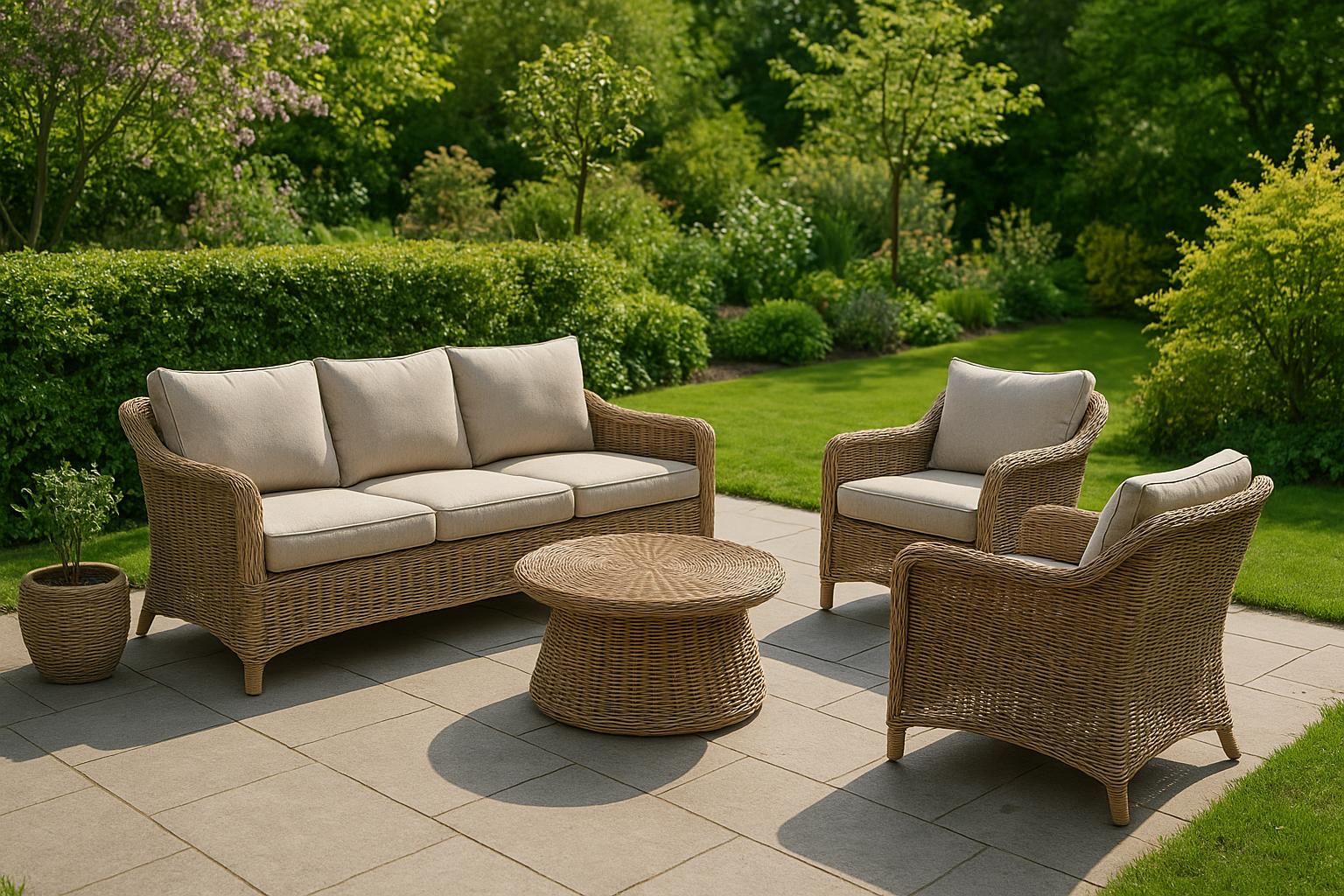
Outdoor furniture is one of the key components to making your garden feel more like a lived-in, useable space rather than a decorative addition to your home. Furniture allows you to sit back and relax in the sunshine, eat outdoors, or entertain guests. Today, because outdoor furniture is seen as such a necessity, there is a plethora of different material options for you to choose from on the market. But which is the best to use? What are the advantages and disadvantages of each? In this article, we will outline your options for outdoor furniture, to help you to find a material that best fits the specifics of your space. Let’s take a look…
A successful outdoor update should feel comfortable, practical and cohesive, with each feature supporting the way the space will be used day to day. Choosing durable materials, weather-resistant finishes and a clear layout will help the area remain attractive and easy to enjoy throughout the seasons.
Timber Furniture
Due to its natural aesthetic, many homeowners choose traditional timber for their outdoor furniture. Because of how timber looks, it is often specified for its ability to seamlessly match and blend in with the surroundings of your outdoor space. Many timber chairs are designed to be folded, making them easy to store, and are lightweight enough for you to move them around with ease. If you choose timber for your outdoor furniture, we recommend choosing a heavy-duty hardwood such as redwood, to ensure a longer lifespan.
Timber, as a natural material, is prone to damage from the effects of weathering, such as mould or mildew growth, unless it is pressure treated. In the worst cases, your chairs and table sets may become completely rotten, and break apart in use. To avoid this, it may be that you must treat the surface of your timber with preservatives, to lock out the effects of moisture. You can buy pre-treated timber furniture, but it tends to be more expensive. If you haven’t the time to paint and preserve your timber, we recommend covering them with a large plastic tarpaulin sheet, or storing them underneath an outdoor shelter, like a pergola or a shed, when not in use.
Metal Furniture
Metal furniture is an ideal choice if your garden design prioritises modernity over tradition and can provide you garden with an incredibly sleek and stylish outdoor seating space. Unlike timber, metal furniture is impervious to pests, making it a far more durable, long-lasting alternative. With many different designs available, ranging from intricate, artistic patterns to simplistic, utilitarian finishes, there is likely metal furniture out there to fit any space.
Though metal will not rot, it is still prone to some moisture damage, in the form of rust. At best, rust can massively discolour your furniture, which can rapidly change its overall appearance, making it look tired and aged. At worst, rust could break apart certain joints and seams of the furniture, which could make it unstable to sit upon. To avoid rust, we would recommend appropriately treating it with metal preservatives, and staying diligent to store away your furniture whenever it rains. Alternatively, choose powder-coated metal furniture, as this extra protective layer will help to lock out moisture.
Rattan Furniture
Rattan furniture is an incredibly popular garden furniture solution, mainly due to its lightweight quality, naturalistic visual appeal, and easy-to-clean surface. It’s an ideal solution for anyone wanting to create a premium looking outdoor seating area on a tight budget. Rattan tables and chairs are made from a tight weave of either natural rattan or a synthetic alternative, connected to a lightweight metal frame that gives the furniture its shape.
Like timber, natural rattan may have to be appropriately weatherproofed to give it a greater longevity when left outside. Understandably, synthetic rattan is far more long-lasting, but it can look more artificial. The weaving, interlocking strips of rattan may also come loose from the metal frame over time depending on the frequency of usage. Helpfully, you can help to protect the surface of your rattan furniture by decorating your seating spaces with comfortable outdoor furnishings, such as cushions or throws.
Recycled Plastic Furniture
At the mere suggestion of plastic furniture, you may be turning up your nose, with the term suggesting the kind of cheap, white, brittle chairs and table sets that may have populated your garden space in the past. Whilst it is undeniable there are many low-quality plastic furniture options available on the market today, there are also some more high-end, luxury versions of the material that are worth considering for your garden space. For example, outdoor furniture made from recycled plastic lumber has a far greater strength than their PVC counterparts and will last far longer than traditional timber or rattan furniture.
By buying recycled plastic furniture, you are helping to minimise the use of “single life” plastic, instead opting for something that may have previously been recycled before. However, make sure to research the validity of your recycled furniture’s claims, to ensure that is has been repurposed responsibly and thoroughly checked for quality. Plastic lumber can be repurposed into chair and table sets, as well as benches and loungers. Recycled plastic furniture is also extremely low maintenance when compared to timber and metal, as you will not need to paint or oil the material to weatherproof it.
To conclude, there are an abundance of different materials you can choose for your garden furniture, all of which have their advantages and disadvantages. For example, whilst some timber is prone to rot, there are timber furniture items pre-treated helping it to keep away these effects. Similarly, making sure to choose powder-coated metal ensures that your furniture will not rust. The weave of natural rattan can slowly become loose over time, but there are stronger, synthetic variants that allow for more longevity. Finally, though some cheaper plastic is brittle and can break apart easily, stronger, thicker plastic lumber can withstand extra pressures. For looks, choosing furniture is up to your own design preferences and the overall feel of the garden. For overall longevity however, we recommend choosing either recycled plastic or metal furniture. Both options prioritise strength and durability and can be recycled and recirculated into further use once you are finished with them.
For commercial gardens, hospitality venues and larger outdoor projects, the finishing details can be just as important as the main structure. composite decking can provide a durable, low-maintenance surface for seating areas, paths, terraces and outdoor entertaining zones; while traditional signage can add character to entrances, garden rooms or hospitality spaces; while digital signage can help commercial venues share opening times, menus, promotions or visitor information clearly; while efficient hand dryers can support cleaner, lower-maintenance washroom facilities in public-facing outdoor settings.
