


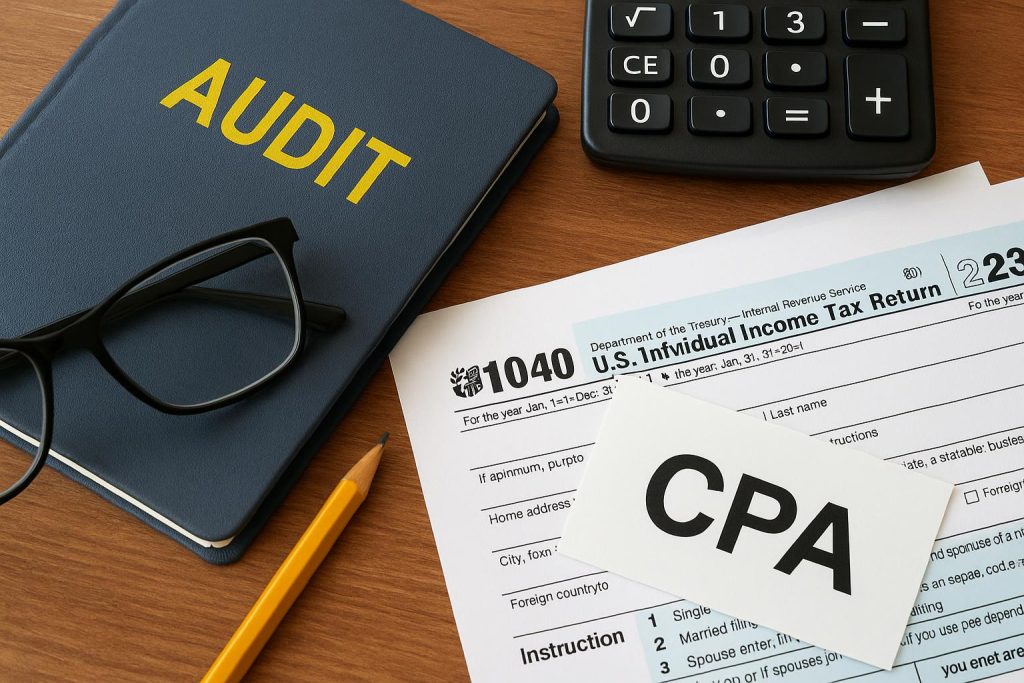
An IRS audit can shake your sense of safety. You may worry about missing records, surprise questions, or painful penalties. You do not need to face that fear alone. A trusted CPA stands between you and that stress. A CPA in East Brunswick helps you understand what the IRS wants, organize your documents, and answer every request with calm and order. You learn what triggers audits. You see what the IRS reviews. You fix weak spots before an agent ever calls. That planning gives you control. It also protects your money and your time. This guide explains how a CPA prepares you step by step. It shows how to respond, what to save, and how to avoid repeat audits. You gain a clear path, simple tasks, and steady support. You walk into an IRS audit prepared, informed, and confident.
What an IRS audit really is
An IRS audit is a review of your tax return. The IRS checks if your income, credits, and deductions match your records. It also checks if those records match reports from employers, banks, and others.
You may face three basic types of audits.
- Mail audit. The IRS sends a letter and asks for proof.
- Office audit. You meet with an IRS agent at an IRS office.
- Field audit. An agent visits your home or business.
The IRS explains its process in plain terms. You do not need to read every page. A CPA reads that guidance and turns it into a clear plan for you.
How CPAs lower audit risk before the IRS calls
A strong tax return is your best shield. A CPA helps you build that shield long before an audit letter arrives. You work together on three simple goals.
- Report income fully and correctly.
- Claim only true deductions and credits.
- Keep records that match every number.
A CPA checks for common triggers.
- Large cash income with no logs.
- Unusual business losses year after year.
- Charity gifts that look too high for your income.
- Mixed personal and business expenses.
You get clear advice. You learn what to stop, what to fix, and what to keep the same. That steady work makes an audit less likely. It also makes an audit less painful if it comes.
Records your CPA helps you build and keep
The IRS trusts records more than words. Your memory fades. Your receipts do not. A CPA helps you set up a simple record system that fits your life.
You focus on three record groups.
- Income records. Pay stubs, Forms W-2, Forms 1099, bank statements, and payment app reports.
- Expense records. Receipts, invoices, mileage logs, childcare bills, tuition bills.
- Legal and family records. Birth records, marriage records, divorce orders, and adoption records.
The IRS gives basic record rules in IRS recordkeeping guidance. A CPA turns those rules into checklists.
You learn how long to keep records. You also learn how to store them in three simple ways.
- Paper folders by year.
- Scanned copies in secure digital folders.
- Backups on a separate device or secure cloud service.
This work feels small. During an audit, it saves your sleep.
What a CPA does when an IRS letter arrives
An audit notice can feel harsh. You may want to ignore it. A CPA stops that reaction and guides your next steps.
You follow a clear order.
- Read the IRS letter. A CPA explains what tax year and what issue the IRS is checking.
- Mark the due date. You avoid late replies that cause extra stress.
- Gather records. Your CPA lists every paper and statement you need.
- Organize proof. You sort by topic. For example, income, expenses, and credits.
Your CPA can also speak with the IRS for you if you sign a power of attorney form. That step lets your CPA handle calls and letters. You still make choices. You just do not stand alone in front of the agent.
Side by side. You versus you with a CPA
The table shows how preparation looks with and without a CPA. Every family is different. Still, this comparison helps you see the difference.
| Audit task | Without CPA | With CPA support |
|---|---|---|
| Reading IRS letter | Guess at meaning. Worry about every word. | Get plain language explanation and clear next steps. |
| Finding records | Search boxes and old emails with no plan. | Use a checklist built from past planning. |
| Talking to IRS | Answer on the spot. Risk saying too much or too little. | Let CPA speak using careful, accurate answers. |
| Time spent | Lose evenings and weekends to panic and guesswork. | Follow a schedule that protects family time. |
| Stress level | High fear. Constant second-guessing. | Lower fear. Steady guidance at each step. |
| Outcome | Higher chance of extra tax and penalties. | Better chance of a fair result and fewer disputes. |
How CPAs protect your rights during an audit
You have rights in every audit. The IRS lists them in the Taxpayer Bill of Rights. A CPA makes those rights real for you. You gain three kinds of protection.
- Protection of time. Your CPA can ask for more time when you need it.
- Protection of scope. Your CPA can push back if the audit grows beyond the tax issues in the letter.
- Protection of records. Your CPA checks every request and shares only what is needed.
If you disagree with an IRS result, your CPA explains appeal choices. You can ask for a meeting with an IRS supervisor. You can file a written protest. You may use the IRS Office of Appeals. Each path has clear rules. Your CPA walks you through the one that fits your case.
Planning after the audit so it does not repeat
An audit can feel like a wound. Still, it also shows weak spots that you can fix. A CPA helps you learn from the review instead of staying stuck in anger.
You work through three questions.
- What did the IRS question?
- What records were hard to find?
- What habits led to the problem?
You then build new steps.
- Change how you track income and expenses.
- Adjust paycheck withholding or estimated payments.
- Update how you claim dependents, credits, or business expenses.
This follow-up turns an audit from a shock into a turning point. You move from fear to control. You also teach your children by example that money rules can be faced and managed.
Taking the next steady step
You do not need to wait for an audit letter to seek help. You can meet with a CPA now. You can review last year’s return. You can set up better records. You can talk through any tax notices you already have.
You deserve clear answers. You also deserve calm nights. With careful planning, honest records, and a steady CPA at your side, an IRS audit becomes a test you can pass, not a storm that knocks you down.

